Home battery storage explained
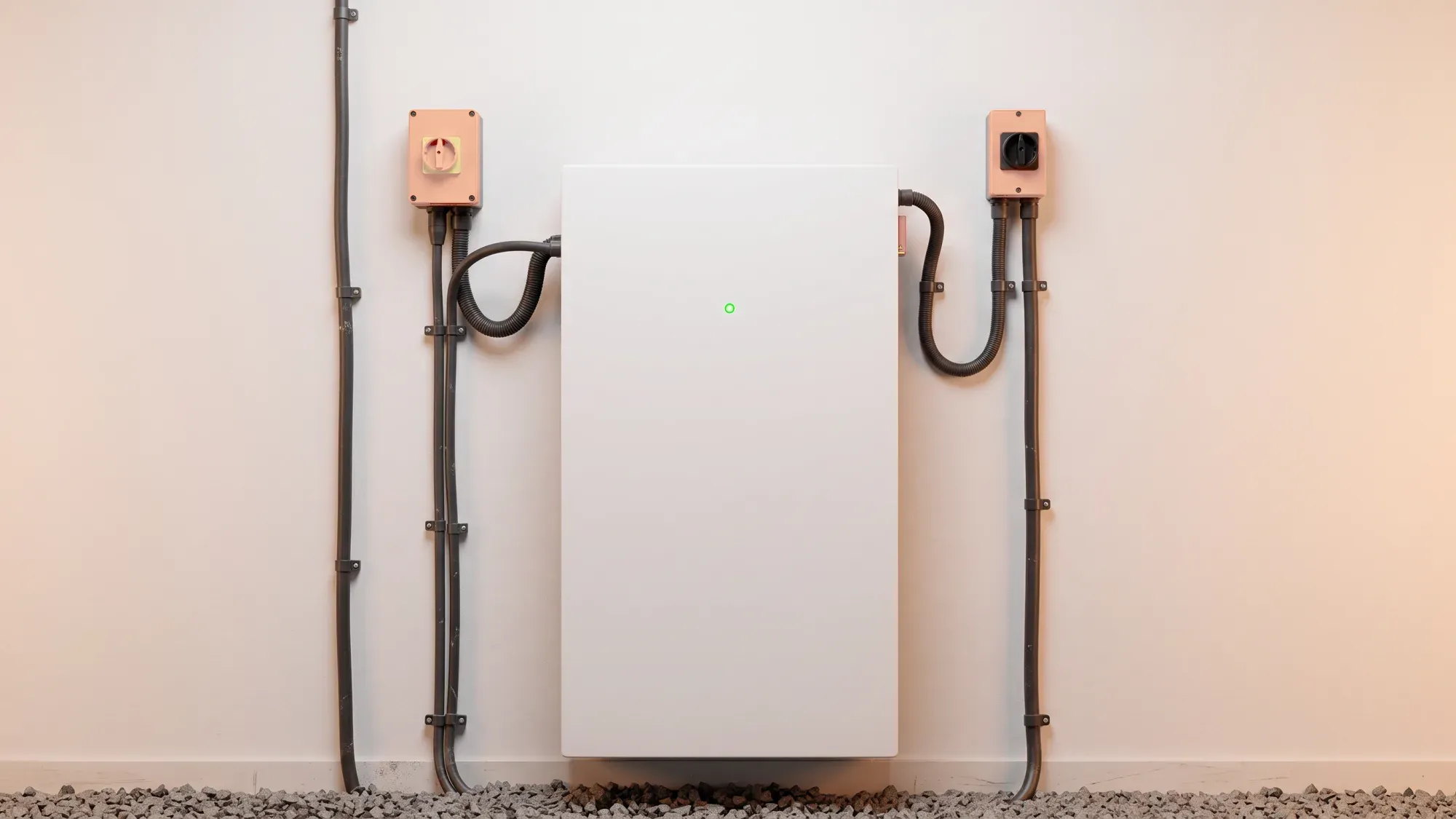
Home battery storage allows UK homeowners to capture and store electricity for later use, offering a strategic advantage in managing household energy. This technology can store excess power generated by solar panels or draw cheaper electricity from the grid during off-peak hours, providing a buffer against rising energy costs and enhancing energy independence. Installing a home battery is a power play, shifting control from grid dependency to personal management and enabling homeowners to optimise their energy use.
What is a home battery?
A home battery is a system designed to store electrical energy, typically for residential use, and then release it when needed. These systems integrate with a home's existing electrical setup, managed by an inverter, to ensure a consistent power supply.
Understanding energy storage
Energy storage in a home battery works by converting electrical energy into chemical energy during charging and then back into electrical energy during discharge. This process allows homeowners to save electricity generated during periods of high production (e.g., sunny afternoons for solar) or low grid prices (e.g., overnight off-peak tariffs) and use it during times of high demand or expensive peak rates.
Components of a home battery system
A typical home battery system comprises several key components:
- Battery cells: These are the core units that store the electricity, most commonly using lithium-ion technology due to its reliability and lifespan.
- Battery management system (BMS): This electronic system monitors and controls the battery's charge levels, temperature, and overall safety, preventing overcharging or over-discharging.
- Inverter: This crucial component converts the direct current (DC) electricity stored in the battery into alternating current (AC) electricity, which is what most household appliances use. For solar setups, a hybrid inverter can manage both solar panel output and battery charging/discharging.
- Metering: Smart meters are essential for tracking energy flow, especially for systems that interact with the grid and smart tariffs.
Benefits of home battery storage for UK homeowners
Home battery storage offers significant advantages for UK homeowners, moving beyond simple cost savings to provide greater control and resilience in energy management.
Achieving energy independence
With a home battery, homeowners can reduce their reliance on the National Grid, especially during peak demand periods. By storing self-generated solar power or cheaper off-peak grid electricity, you gain more control over your energy supply, contributing to a sense of energy independence. This capability allows you to use your own stored power when grid prices are highest, rather than being dictated by market fluctuations.
Reducing electricity bills with smart tariffs
One of the most compelling benefits of a home battery is its ability to reduce electricity bills, particularly when combined with smart tariffs. These tariffs offer varying electricity prices throughout the day, with cheaper rates during off-peak hours. Home batteries can be programmed to charge when electricity is cheapest and discharge when rates are higher, effectively buying low and selling (or using) high. This strategy can lead to substantial savings. Choosing the best solar and battery tariff is crucial for maximising these savings.
Backup power during outages
Home batteries can provide a critical source of backup power during grid outages. While not all systems offer this feature, many modern batteries can keep essential appliances running when the main power supply fails, offering peace of mind and maintaining comfort during unexpected disruptions.
Optimising solar panel output
For homes with solar panels, a battery is a natural extension that maximises the value of self-generated electricity. Solar panels typically generate most electricity during the day, when many households are out. Without a battery, this excess energy is often exported to the grid for a minimal payment. A battery stores this surplus, allowing you to use your own clean energy in the evenings or on cloudy days, significantly increasing your self-consumption and reducing the amount of electricity you need to import from the grid. This is one of the key advantages of solar energy.
How home batteries work
Home batteries function through a cycle of charging and discharging, managed by intelligent systems that optimise energy flow.
Charging and discharging cycles
The fundamental operation involves charging the battery when there's an excess of electricity (from solar or cheap grid power) and discharging it when demand is high or grid electricity is expensive. This process is largely automated by the battery's inverter and management system, ensuring efficient energy transfer without manual intervention. Modern lithium-ion batteries are designed for thousands of charge cycles, offering a long operational lifespan.
Integration with solar panels
When integrated with solar panels, the battery acts as a buffer. During daylight hours, solar panels generate electricity. This power first supplies the home's immediate needs. Any surplus then charges the battery. Once the battery is full, any remaining excess can be exported to the grid, potentially earning payments through schemes like the Smart Export Guarantee (SEG). In the evenings or when solar generation is low, the home draws power from the battery before importing from the grid.
Grid-connected vs off-grid systems
Most home battery systems in the UK are grid-connected. This means they remain linked to the national electricity grid, allowing them to draw power from it when needed and export excess energy back. This setup offers the best of both worlds: energy independence combined with the reliability of grid access. Off-grid systems, by contrast, are entirely self-sufficient, relying solely on their own generation and storage. While possible, these are less common for typical UK homes due to the significant investment required for complete energy autonomy.
Types of home battery systems
The market for home battery systems is evolving, with various technologies and capacities available to suit different needs.
Lithium-ion batteries
Lithium-ion batteries are the dominant technology for residential energy storage in the UK. They are favoured for their high energy density, long lifespan, and efficiency. Within the lithium-ion family, Lithium Iron Phosphate (LFP) batteries are increasingly popular due to their enhanced safety and durability.
Other battery technologies
While less common for new domestic installations, other battery technologies exist. Lead-acid batteries, for instance, are a more traditional option but typically have a shorter lifespan and lower energy density compared to lithium-ion, requiring more space for the same capacity. Research and development continue in areas like flow batteries and solid-state batteries, which may offer future alternatives.
Battery capacity and power output
Battery capacity, measured in kilowatt-hours (kWh), indicates how much energy a battery can store. Power output, measured in kilowatts (kW), determines how quickly the battery can deliver that energy. The average UK household uses around 2,700 kWh of electricity per year1. Understanding your average electricity usage can help determine the right battery size for your home.
Key considerations before installing a home battery
Before committing to a home battery system, several factors require careful thought to ensure the chosen solution meets your needs and complies with regulations.
Sizing your battery system
Determining the right battery size is crucial. Underestimating capacity can lead to insufficient storage, while overestimating can result in unnecessary expense. Assess your average daily electricity consumption and consider your energy habits, especially peak usage times. If you have solar panels, factor in your typical solar generation. A certified installer can help you calculate the optimal capacity based on your specific circumstances.
Compatibility with existing systems
Ensure any new battery system is compatible with your existing electrical infrastructure, particularly if you have solar panels and an inverter. Some batteries are designed to integrate seamlessly, while others may require additional components or inverter upgrades, which can impact the overall cost.
Installation requirements and regulations
Installation must comply with UK building regulations and electrical safety standards. New wiring rules for battery storage were introduced in BS 7671 Amendment 4 on 15 April 2026, with compliance mandatory from 15 October 2026. These regulations specify installation locations, with lofts, bedrooms, hallways, stairwells, and small internal cupboards generally restricted. Outdoor installation is often recommended where practicable. Planning permission is generally not required for home battery installations unless the property is listed or in a conservation area, but local authority guidance should always be checked.
Warranties and lifespan
Home batteries represent a significant investment, so understanding the warranty and expected lifespan is important. Most modern lithium-ion systems come with a 10-year warranty, with an expected operational life of 10-15 years. Reviewing these terms helps in assessing the long-term return on investment.
Costs, savings, and UK incentives
The financial aspect of home battery storage involves initial costs, potential savings, and various government incentives designed to make these systems more accessible.
Understanding installation costs
The cost of home battery storage can vary significantly depending on factors such as battery size, brand, inverter type, and installation complexity.
Calculating potential savings
Home batteries offer several avenues for savings. For solar owners, they maximise self-consumption, reducing reliance on grid imports. For all homeowners, they enable energy arbitrage: charging the battery during off-peak hours when electricity is cheaper and using that stored energy during more expensive peak times. Savings can be further enhanced by integrating with smart tariffs that offer dynamic pricing.
Can I have a home battery without solar panels?
Yes, you can install a home battery without solar panels. These systems can charge from the grid during off-peak hours when electricity is cheaper, allowing you to use that stored energy during more expensive peak times. This strategy, known as energy arbitrage, can significantly reduce your electricity bills, especially when combined with a smart tariff.
Available grants and schemes
Several grants and schemes are available in the UK to support home battery installations:
- Zero VAT: Residential battery installations currently benefit from 0% VAT until 31 March 2027, applying to both standalone batteries and those installed with solar panels.
- SEG: While not a direct grant for installation, the SEG mandates that larger energy suppliers pay homeowners for any excess renewable electricity they export back to the grid. To qualify, you typically need an eligible renewable system (like solar panels), MCS certification, and a smart meter capable of recording export in half-hourly periods.
The installation process
Installing a home battery system is a multi-step process, from selecting an installer to managing your system post-installation.
Choosing a certified installer
Selecting a certified and reputable installer is paramount. Look for installers accredited under schemes like the Microgeneration Certification Scheme (MCS), as this is often a requirement for accessing grants and ensuring quality. Obtain multiple quotes to compare costs and ensure they cover both the product and installation.
What to expect during installation
The installation typically involves mounting the battery unit (often in a garage, utility room, or on an external wall), wiring it into your home's electrical system, and connecting it to your inverter and smart meter. The process usually takes one to two days, depending on the complexity of the setup and whether solar panels are being installed concurrently. Installers will ensure all connections are safe and compliant with current regulations.
Post-installation management and monitoring
Once installed, modern home battery systems are largely automated. Many come with dedicated apps that allow you to monitor energy flow, track savings, and adjust settings to optimise performance. The Fuse app, for example, can act as a remote in-home display for customers with a smart meter, showing hourly, daily, monthly, and annual usage, helping you manage your energy effectively.
References
- UK Government. Subnational electricity and gas consumption statistics
Disclaimer
For the avoidance of doubt, this article is provided for informational purposes only and is not intended to constitute legal or financial advice. The author and/or Fuse Energy shall not be responsible for any losses arising out of any reliance on the information contained herein.