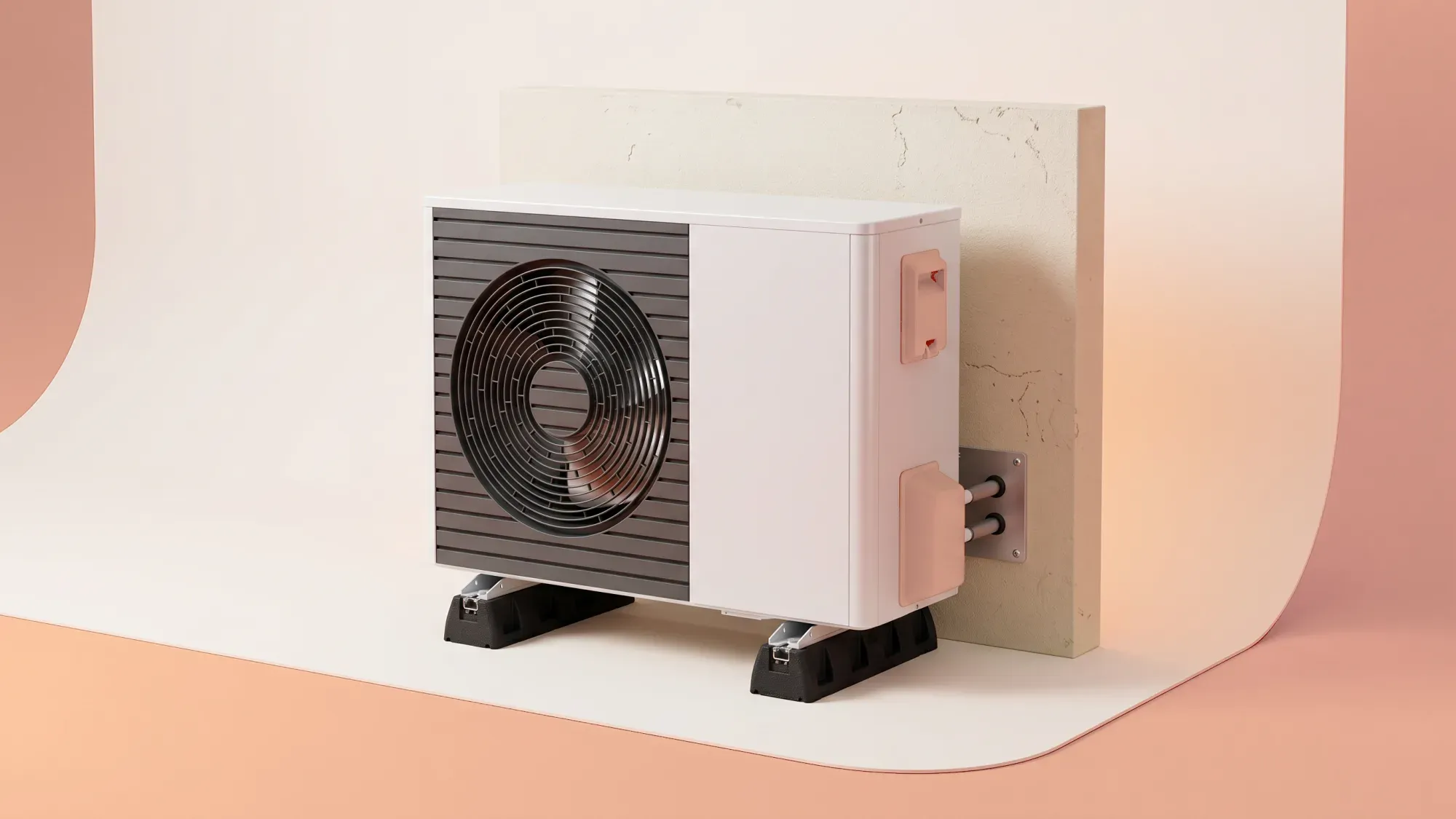
Heat pumps offer an efficient way to heat your home, but understanding their running costs is key to maximising their benefits. While electricity prices and the system's efficiency (Coefficient of Performance, or COP) are major factors, homeowners can significantly influence these costs through smart energy management and home improvements. This guide explains what affects your heat pump's running costs and how to take control to reduce them.
Understanding heat pump running costs
The cost of running a heat pump in the UK is not a fixed figure. It varies based on several interconnected factors. Grasping these elements is the first step towards optimising your energy usage and keeping bills manageable.
Key factors influencing your bill
Your heat pump's running cost primarily depends on two things: the price you pay for electricity and how efficiently your system converts that electricity into heat. Electricity unit rates fluctuate, influenced by market dynamics and your chosen tariff. The efficiency of your heat pump, measured by its Coefficient of Performance (COP), is not constant either; it changes with external temperatures and how well your home retains heat.
Coefficient of performance (COP) explained
The Coefficient of Performance (COP) measures a heat pump's efficiency. Simply put, it tells you how many units of heat energy your system produces for every unit of electricity consumed. For example, an air source heat pump can achieve efficiencies of 300% or more, meaning it produces at least 3 kWh of heat for every 1 kWh of electricity used. The higher the COP, the more heat you get for your money.
Strategies for optimising heat pump efficiency
Improving your heat pump's efficiency directly translates into lower running costs. This involves a combination of home improvements and proper system management.
Home insulation and draught proofing
The most efficient heat pump will struggle and cost more to run in a poorly insulated home. Improving your home's insulation and addressing draughts are fundamental steps. This ensures that the heat generated by your system stays inside, reducing the workload on your heat pump and, consequently, your energy bills.
System sizing and installation quality
An incorrectly sized or poorly installed heat pump will operate inefficiently. A system that is too small will constantly work overtime, while one that is too large may cycle on and off frequently, both leading to higher energy consumption. Professional sizing and installation by an MCS-certified installer are crucial for optimal performance.
Regular maintenance and servicing
Like any heating system, a heat pump benefits from regular maintenance. Annual servicing ensures all components are working correctly, filters are clean, and the system is operating at peak efficiency. This preventative measure can identify minor issues before they become costly problems, helping to keep running costs down.
Leveraging smart tariffs and controls
Active energy management through smart tariffs and app-based tools can significantly reduce heat pump running costs.
The power of time-of-use tariffs
Smart electricity tariffs, particularly time-of-use (TOU) rates, offer cheaper electricity during off-peak hours. By shifting your heat pump's operation to these periods - for example, heating your home or hot water tank overnight - you can take advantage of lower unit rates. This can make a substantial difference to your overall running costs.
Smart thermostats and scheduling
Pairing your heat pump with a smart thermostat allows for precise control and scheduling. You can program your heating to align with your daily routine and the cheapest tariff periods, avoiding unnecessary energy consumption when you are out or asleep. Many smart thermostats also learn your preferences and optimise heating automatically.
The Fuse app: your control centre
The Fuse app empowers heat pump owners to actively manage and reduce their running costs. It provides real-time insights into your energy consumption and offers scheduling capabilities, allowing you to effortlessly align your heat pump usage with the most cost-effective times. This transparency and control over your energy usage can turn energy management into a powerful advantage.
Government support and long-term savings
Beyond optimising your system, understanding available government support and comparing heat pumps to traditional heating can highlight the long-term financial benefits.
The Boiler Upgrade Scheme (BUS)
The Boiler Upgrade Scheme (BUS) is a government initiative providing grants for heat pump installations in England and Wales. It offers grants of £7,500 for air source and ground source heat pumps. For households in England and Wales currently using heating oil, an uplifted grant of £9,000 is available to help them move off the oil grid. For the BUS, the MCS-certified installer applies for the grant on the homeowner's behalf, and the grant value is deducted from the installation quote.
Comparing heat pump running costs to gas boilers
Heat pumps can be competitive with gas boilers, especially given fluctuating gas prices. The average UK home uses around 2,500 kWh of electricity and 9,500 kWh of gas per year1. Heat pumps, by design, are highly efficient, converting 1 kWh of electricity into 3 kWh or more of heat. This inherent efficiency often leads to long-term savings compared to less efficient heating systems.
What is the average annual running cost for a heat pump in the UK?
The annual running cost for a heat pump in a typical UK home varies significantly based on factors such as home insulation, usage patterns, and electricity tariffs. Heat pumps are highly efficient, often converting 1 kWh of electricity into 3 kWh or more of heat.
Environmental benefits and future trends
Choosing a heat pump contributes to a lower carbon footprint, aligning with broader environmental goals. As the UK grid decarbonises, the environmental benefits of heat pumps will only increase. Future trends point towards greater integration of smart technologies and renewable energy sources, further enhancing the efficiency and cost-effectiveness of heat pump systems.
Taking control of your energy future
Heat pumps offer a path to more sustainable and cost-effective home heating. By understanding the factors that influence running costs, investing in home efficiency, and actively managing your energy consumption with smart tariffs and tools, you can significantly reduce your bills. This approach gives you greater control over your energy, making it abundant and manageable.
For the avoidance of doubt, this article is provided for informational purposes only and is not intended to constitute legal or financial advice. The author and/or Fuse Energy shall not be responsible for any losses arising out of any reliance on the information contained herein.