Great British Insulation Scheme explained
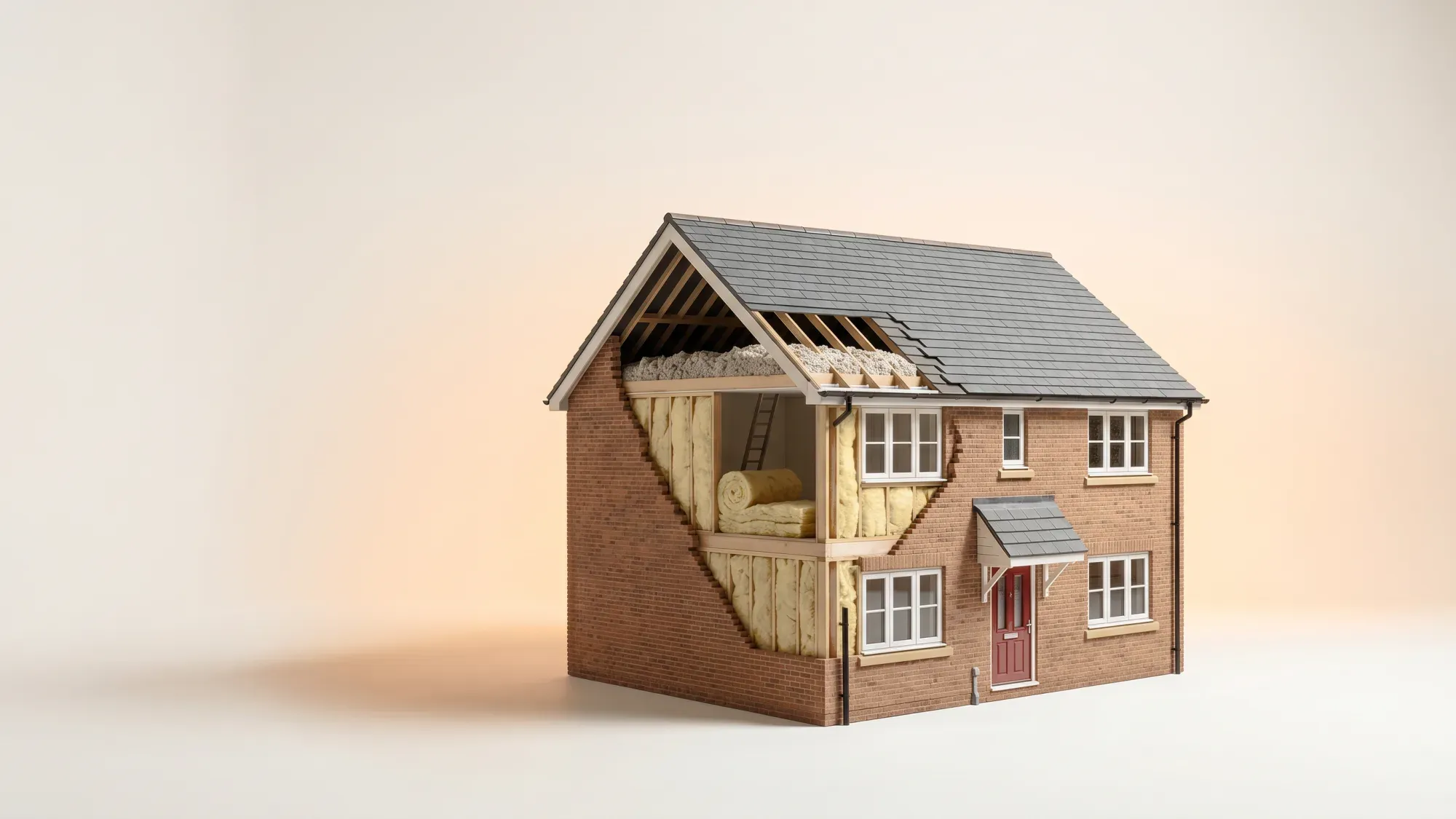
The Great British Insulation Scheme (GBIS) was a UK Government initiative launched in March 2023 to help households improve their home's energy efficiency and reduce energy bills. While the scheme aimed to run until March 2026 for installations, it closed to new applicants in October 2025. The GOV.UK referral service for GBIS officially closed on 31 March 2026, with all installations needing to be completed by this date. GBIS aimed to make insulation more accessible for homeowners, landlords, and tenants across England, Scotland, and Wales, focusing on delivering cost-effective insulation measures to properties with lower energy efficiency ratings.
Improving your home's insulation is a smart move for your energy bills and comfort. If you're looking to take control of your home energy, Fuse Energy offers clear pricing and tools to help you understand your usage. Click here to switch to Fuse Energy today.
Enter your address to get a quote and see how much you could save
What was the Great British insulation scheme?
The GBIS was a government-backed programme administered by Ofgem, the energy regulator. Its primary goal was to enhance energy efficiency in residential properties by providing free or cheaper insulation.
Purpose and aims of the GBIS
The core purpose of the GBIS was to tackle fuel poverty, reduce household energy bills, and contribute to the UK's carbon reduction targets. It aimed to deliver improvements to the least energy-efficient homes in Great Britain. Unlike the broader ECO4 scheme, which often focused on a 'whole house' approach, GBIS primarily delivered single, lower-cost insulation measures to help as many homes as possible quickly.
Key dates: launch and closure
The GBIS launched in March 2023. It closed to new applicants in October 2025, with the GOV.UK referral service officially closing on 31 March 2026. All insulation installations under the scheme were required to be completed by this final date.
Who was eligible for the GBIS?
Eligibility for the GBIS was designed to be broader than some other energy efficiency programmes, reaching a wider range of households. There were two main routes to eligibility: a general group and a low-income group.
Income-based eligibility
Households receiving certain income-related benefits could qualify under the low-income group. This included benefits such as Income-based Jobseeker's Allowance, Income-related Employment and Support Allowance, Income Support, Pension Credit, and Universal Credit.
Property-based eligibility
For the general group, eligibility was primarily based on the property's characteristics, regardless of household income. Properties needed to have an Energy Performance Certificate (EPC) rating of D, E, F, or G. Additionally, the property had to be within Council Tax bands A-D in England, or A-E in Scotland and Wales.
Owner-occupiers and landlords
The scheme was available to homeowners and private renters. Landlords could also apply, but tenants needed to obtain permission from their landlord before any installation work took place.
What insulation measures did the scheme cover?
The GBIS focused on delivering single insulation measures, making it simpler for households to improve their energy efficiency.
Loft insulation
Loft insulation was a key measure covered by GBIS. This involves adding insulating material to the loft space to prevent heat from escaping through the roof, which can account for a significant portion of heat loss.
Cavity wall insulation
Many homes built after the 1920s have cavity walls, and filling this gap with insulation was another primary measure under the scheme. Cavity wall insulation helps to keep cold air out and reduce heat loss through external walls.
Solid wall insulation
For properties with solid walls, both internal and external solid wall insulation were covered. This measure is often more complex and costly than loft or cavity wall insulation but can significantly improve the energy performance of older homes.
Other measures
Beyond the most common types, GBIS also covered a range of other insulation measures, including pitched roof, flat roof, under-floor, solid floor, park home, and room-in-roof insulation. The specific measure offered depended on a property assessment to determine the most suitable upgrade.
How to apply (when the scheme was active)
When the GBIS was active, the application process was designed to be straightforward, primarily through an online eligibility checker.
The application process
Households could typically check their eligibility and apply via the GOV.UK website. This involved providing details about their property, such as address and council tax band. If eligible, applicants would then be referred to an energy supplier or approved installer.
What happened after applying
Once an application was submitted, an installer would typically carry out a free home survey to assess the property and recommend the most suitable insulation measure. If the household decided to proceed, an installation date would be agreed upon, and the work would be completed by a TrustMark registered installer. The cost, or a contribution towards it, would be covered by the scheme.
Why the scheme closed
The GBIS, along with the ECO scheme, was scheduled to end on 31 March 2026. The closure to new applicants in October 2025 and the GOV.UK referral service on 31 March 2026 allowed energy suppliers enough time to process existing applications and complete installations before the final deadline. The scheme was part of broader government efforts to reduce energy bills and meet carbon reduction targets.
Alternatives to GBIS
While the GBIS is no longer accepting new applications, other avenues for improving home energy efficiency and reducing bills still exist.
ECO4 scheme
The ECO4 scheme continues to run, generally focusing on more extensive, 'whole house' energy efficiency improvements for low-income and vulnerable households. ECO4 often requires recipients to be on means-tested benefits.
Local authority grants
Local councils may offer their own grants or support programmes for energy efficiency upgrades, often through initiatives like the Local Authority Delivery (LAD) scheme or Home Upgrade Grant (HUG) . These can vary by region, so it's worth checking with your local authority.
Private funding and energy efficiency improvements
Even without government grants, investing in insulation can significantly reduce energy bills and improve home comfort. Many homeowners choose to fund insulation upgrades privately. This could include loft insulation, cavity wall insulation, or more comprehensive measures like external wall insulation. Understanding your energy consumption is key to making informed decisions about such improvements, and you can find ways to achieve energy bill savings through various measures.
The ongoing importance of home insulation
Even with the closure of GBIS, the benefits of a well-insulated home remain significant for every household.
Reducing energy bills
Insulation is one of the most effective ways to prevent heat loss from your home, meaning you need less energy to keep it warm. This directly translates to lower heating bills, providing long-term savings. Loft insulation can lead to significant savings on energy bills.
Improving home comfort
A well-insulated home maintains a more consistent indoor temperature, eliminating cold spots and draughts. This creates a more comfortable living environment throughout the year, keeping your home warmer in winter and cooler in summer.
Contributing to net zero goals
Improving home insulation plays a crucial role in the UK's efforts to reduce carbon emissions and achieve net-zero targets. By reducing the amount of energy needed to heat our homes, we decrease our reliance on fossil fuels and lower our collective carbon footprint. Exploring options like solar energy can further enhance your home's energy independence and contribute to these goals.
While the GBIS has concluded for new applicants, the fundamental need for energy-efficient homes and lower bills remains. Fuse Energy empowers homeowners and renters with tools to understand and manage their energy usage, complementing the benefits of a well-insulated home. You can find clear pricing and smart tools in the Fuse app to help you make the most of your energy. Click here to switch to Fuse Energy today and start your journey towards a more energy-efficient home.
Disclaimer
For the avoidance of doubt, this article is provided for informational purposes only and is not intended to constitute legal or financial advice. The author and/or Fuse Energy shall not be responsible for any losses arising out of any reliance on the information contained herein.