Foil radiator insulation: how it works
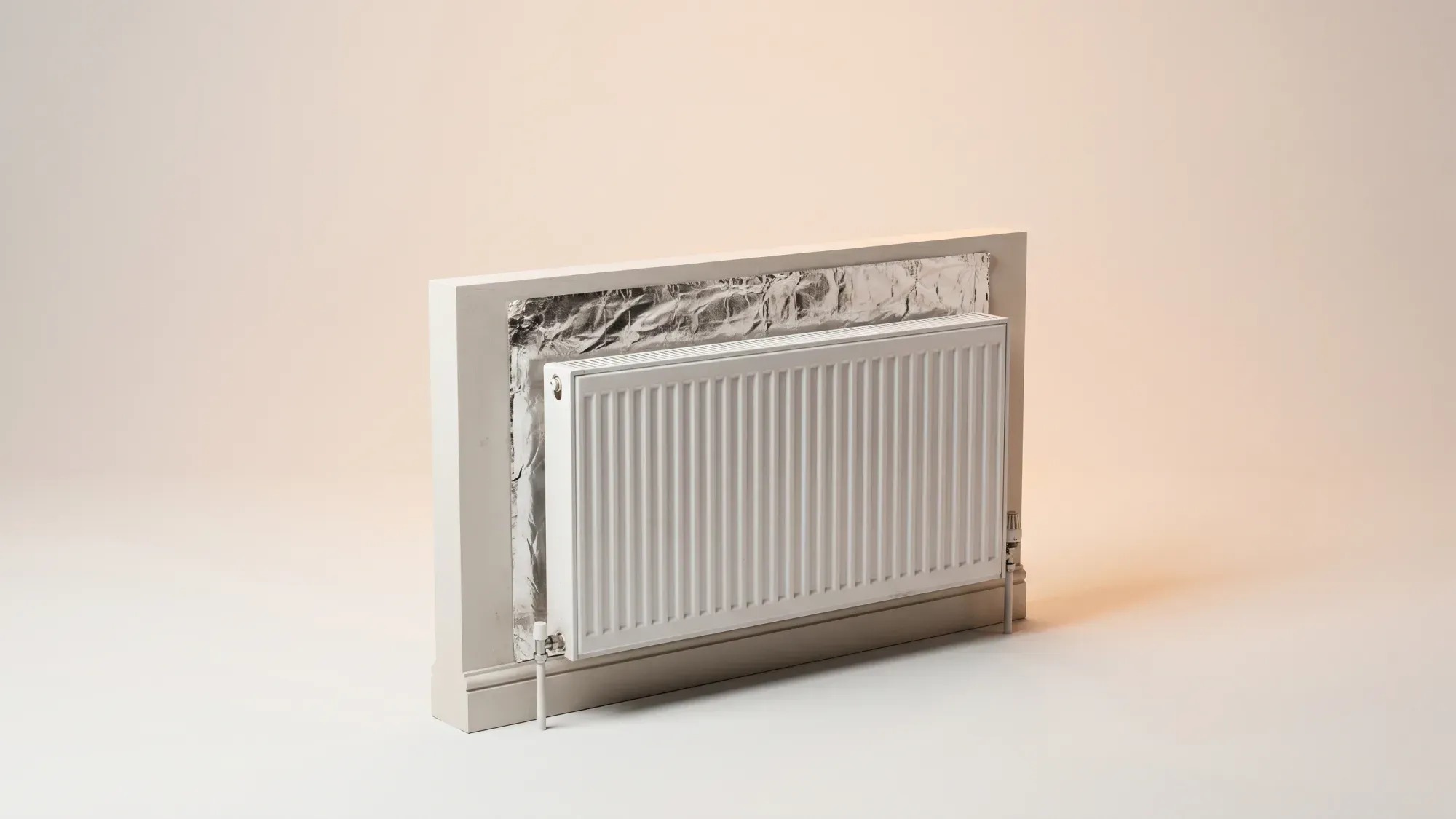
Foil radiator insulation can be a simple, affordable way for homeowners and renters to reduce heat loss and improve warmth in their homes. These reflective panels work by redirecting heat that would otherwise escape through external walls back into the room, making your heating system more efficient. While not a standalone solution for poor insulation, it is a practical, low-cost DIY measure that can offer noticeable benefits, particularly in older properties with uninsulated external walls.
Radiator foil insulation is a straightforward way to boost your home's energy efficiency, especially if you are looking for accessible, low-cost solutions. Fuse Energy aims to empower you with practical knowledge to make your home warmer and more energy-efficient. Click here to switch to Fuse Energy today.
Enter your address to get a quote and see how much you could save
Understanding radiator foil insulation
Radiator reflectors, often called radiator foil or radiator back foil, are thin sheets of reflective material placed on the wall directly behind a radiator. Their primary purpose is to reflect radiant heat back into the room, preventing it from being absorbed by the wall. This process helps to ensure more of the heat circulates within the room, making it feel warmer and potentially reducing the energy needed to maintain a comfortable temperature.
What is radiator foil and how does it work?
Radiator foil is typically made from a thin layer of polyethylene foam or bubble wrap, laminated with aluminium foil. The aluminium surface is highly reflective, designed to bounce infrared radiation (radiant heat) away from the wall. When a radiator heats up, it emits heat in two ways: convection (heating the air) and radiation (emitting infrared waves). Without foil, a significant portion of this radiant heat can be absorbed by the wall behind the radiator, especially if it is an external wall.
The science behind heat reflection
The reflective surface of radiator foil works on the principle of emissivity. Materials with low emissivity, like polished aluminium, are poor emitters of radiant heat and excellent reflectors. When radiant heat from the radiator strikes the foil, it is reflected back into the room rather than passing through the wall. This reduces the amount of heat lost to the outside, meaning more heat stays where you want it - in your home.
Benefits of using radiator foil
Using radiator foil insulation offers several practical advantages for homeowners looking to enhance their home's warmth and efficiency without undertaking major renovations.
Reducing heat loss and improving warmth
Radiator foil insulation can reduce heat loss through external walls, contributing to a warmer room and potentially lower heating costs. This is particularly true for properties with uninsulated external walls, where heat loss to the outside can be substantial. By reflecting heat back into the living space, the foil helps to maintain a more consistent room temperature, reducing the need for your heating system to work as hard. Heat loss through external walls can account for a significant portion of a home's total heat loss, especially in older, uninsulated properties.
Cost-effectiveness and ease of installation
Radiator foil is a low-cost energy efficiency measure, typically costing between £15 and £25 per roll, making it an accessible DIY upgrade. Its affordability means you can outfit multiple radiators without a significant upfront investment. Installation is straightforward and does not require specialist tools or skills, making it a popular choice for homeowners seeking immediate, tangible improvements.
How much does radiator foil cost?
Radiator foil is a low-cost energy efficiency measure, typically costing between £15 and £25 per roll. This makes it an accessible DIY upgrade for most households looking to reduce heat loss and improve home warmth without significant expense.
Where to install radiator foil for best results
The effectiveness of radiator foil insulation largely depends on where and how it is installed. Strategic placement ensures you maximise its heat-reflecting capabilities.
External walls vs internal walls
Radiator foil is most effective when installed behind radiators located on external walls, particularly those that are uninsulated. External walls are where the greatest amount of heat loss to the outside occurs. Placing foil here helps to bounce that heat back into your room, preventing it from escaping.
Installing foil behind radiators on internal walls, which separate heated rooms or are well-insulated, offers minimal benefit. Heat lost to an internal wall would typically transfer to another part of your home, not escape to the outside. Therefore, focus your efforts on external walls for the best return on your investment.
Considerations for different radiator types
Radiator foil is suitable for most conventional radiators. For radiators with a flat back, the foil can be easily attached directly to the wall. If your radiator has a more complex design or is very close to the wall, you might need to use a thinner foil or cut it into smaller sections to ensure it fits snugly without impeding airflow. Ensure the foil does not block any vents or controls on the radiator itself.
Step-by-step guide to installing radiator foil
Installing radiator foil is a simple DIY task that can be completed in a short amount of time.
Tools and materials you'll need
Before you begin, gather the following:
- Radiator reflector foil: purpose-designed, not standard kitchen foil
- Measuring tape
- Scissors or a utility knife
- Pencil
- Adhesive pads or strong double-sided tape: often included with the foil
- Cleaning cloth and mild detergent
Preparing the area and attaching the foil
- Assess and clean: Identify which radiators are on external or uninsulated walls. Turn off the heating and allow the radiator to cool completely. Clean the wall surface behind the radiator to ensure good adhesion for the tape or pads.
- Measure and cut: Measure the area behind the radiator, noting its width and height. Cut the radiator foil to the correct dimensions, allowing for a slight overlap (around 1-2 cm on each side) to ensure full coverage.
- Attach the foil: Apply adhesive pads or double-sided tape to the corners and along the edges of the back of the foil. Carefully slide the foil behind the radiator, reflective side facing the room. Press firmly to secure it to the wall.
- Ensure smooth coverage: Smooth out any wrinkles or air bubbles to ensure the foil lies flat against the wall and covers the area effectively. The goal is maximum reflection with minimal obstruction.
Tips for optimal performance
- Use purpose-designed foil: Standard kitchen foil is thinner and less durable, and may not have the same reflective properties or insulation backing as dedicated radiator foil.
- Maximise coverage: Ensure the foil covers as much of the wall area behind the radiator as possible without being visible from the front or interfering with the radiator's function.
- Maintain airflow: Avoid pushing the radiator too close to the wall after installation, as this can restrict convection and reduce the radiator's overall efficiency.
Realistic expectations and limitations
While radiator foil is a beneficial energy-saving measure, it is important to have realistic expectations about its impact and understand its limitations.
When radiator foil is most effective
Radiator foil is most effective as a supplementary measure in homes with older, uninsulated external walls. In such properties, it can make a noticeable difference to room temperature and contribute to lower heating costs by preventing heat from escaping. It is a foundational step in a broader energy efficiency strategy, complementing other measures like draught-proofing or loft insulation.
Disadvantages and common misconceptions
- Not a miracle solution: Radiator foil will not solve fundamental issues of poor home insulation. It is a small improvement, not a complete overhaul.
- Limited impact on internal walls: As discussed, installing foil behind radiators on internal walls offers little to no benefit, as heat transfer to another room is not the same as heat loss to the outside.
- Aesthetics: While typically hidden, poorly installed or visible foil can detract from a room's appearance.
- Incorrect installation: If the foil is not smooth, does not cover the area fully, or restricts airflow, its effectiveness will be reduced.
Fuse Energy does not sell or install radiator foil insulation, but champions practical steps towards a more efficient home. By understanding how and where to use radiator foil, you can make an informed decision to improve your home's warmth and energy efficiency.
Making your home more energy-efficient, whether through simple DIY projects like radiator foil or by optimising your energy supply, can lead to real savings. Fuse Energy offers clear pricing, real-time usage data, and 24/7 human customer support to help you take control of your energy bills. Switching is quick and easy, so you can start making smarter energy choices today. Click here to switch to Fuse Energy and explore a new approach to home energy. You can also learn more about our mission to create an energy-abundant future by clicking here.
Disclaimer
For the avoidance of doubt, this article is provided for informational purposes only and is not intended to constitute legal or financial advice. The author and/or Fuse Energy shall not be responsible for any losses arising out of any reliance on the information contained herein.