Export meters and how to earn from solar
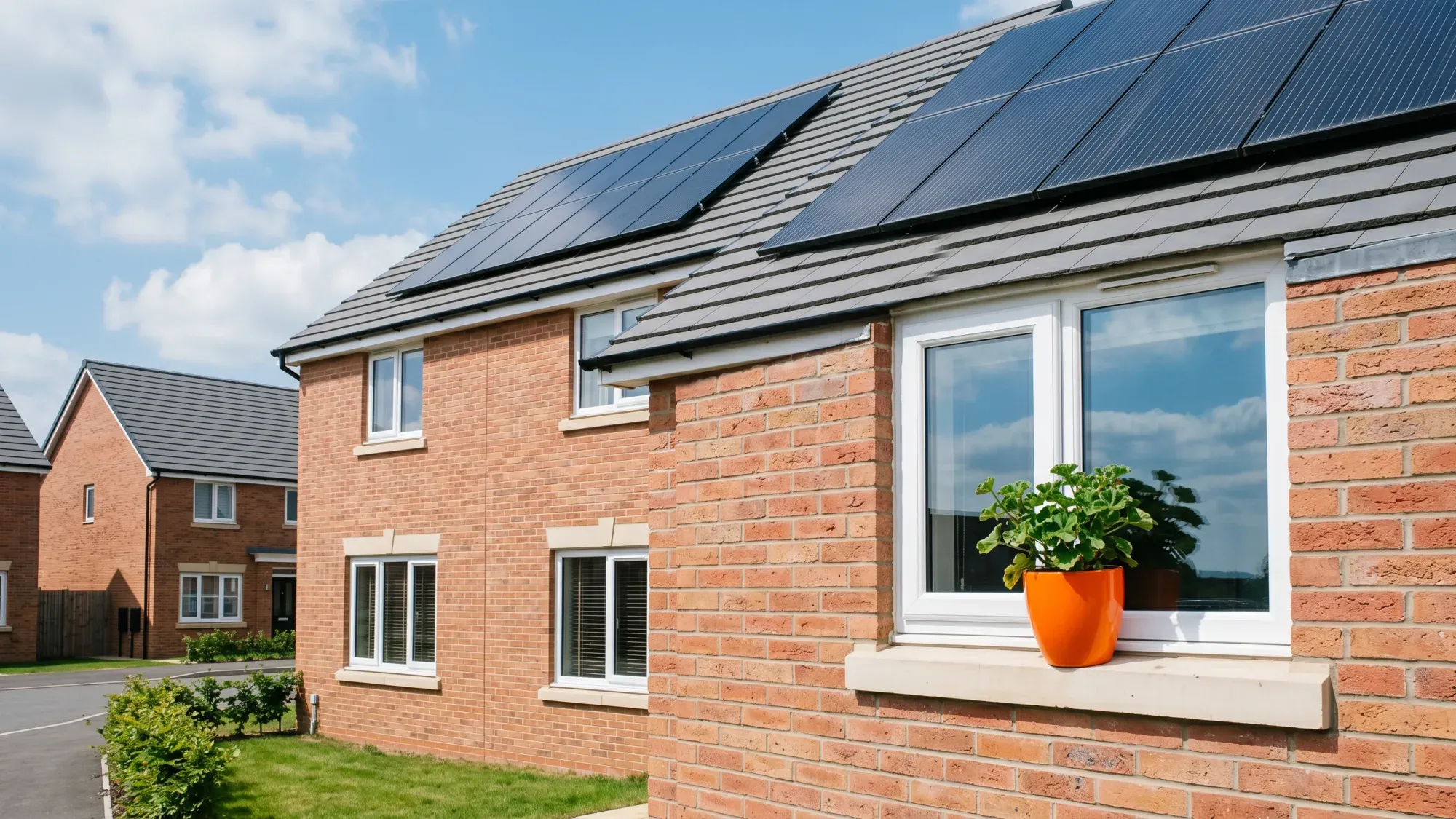
Many UK homeowners with solar panels or other microgeneration systems often wonder how they can get paid for the electricity they export. The answer involves an export meter and the Smart Export Guarantee (SEG), but the process can seem complex. This guide simplifies it, explaining what an export meter is, how it works, and the steps to earn from your surplus energy.
If you are generating your own clean energy, you could be earning from your surplus. Fuse Energy supports microgeneration and our app can help you track your energy contributions and understand your energy data. Click here to get started.
Enter your address to get a quote and see how much you could save
What is an export meter?
An export meter is a dedicated device that measures the amount of surplus electricity your home sends back to the National Grid. If you have solar panels or a wind turbine, you will likely produce more electricity than you use at certain times. This meter quantifies that excess, allowing you to be paid for your contribution to the grid.
What is an export meter?
An export meter is a device installed at your property that specifically measures the volume of surplus electricity your microgeneration system (like solar panels) sends back to the National Grid. This measurement is crucial for calculating payments you receive under schemes such as the Smart Export Guarantee (SEG).
Export meter versus generation meter versus import meter
It is easy to confuse the different types of meters found in a home with microgeneration, but each serves a distinct purpose:
- Import Meter: This is your standard electricity meter, measuring the energy you draw from the grid for your home's consumption. It is what your energy supplier uses to bill you.
- Generation Meter: If you have a microgeneration system, this meter records the total amount of electricity your system produces. It is often used to track the performance of your solar panels or wind turbine.
- Export Meter: As discussed, this meter specifically measures the surplus electricity your system sends back to the grid. It only records outward flow, not total generation or inward consumption.
The role of export meters in the Smart Export Guarantee (SEG)
The Smart Export Guarantee (SEG) is a UK government-backed scheme that mandates licensed electricity suppliers to offer tariffs for exported electricity1. Essentially, it is how you get paid for sending your surplus energy to the grid. SEG payments are calculated based on the volume of electricity exported, as recorded by your export meter. Ofgem, the energy regulator, oversees the SEG scheme, ensuring suppliers with at least 150,000 domestic customers provide a tariff.
Identifying your export meter
Knowing what your export meter looks like and where to find it is a common hurdle for homeowners. While they might resemble other meters, a few key features can help you identify yours.
What does an export meter look like?
Export meters can vary in appearance depending on the manufacturer and model. Often, they are digital and may be located next to your import meter or generation meter. Look for a display that shows readings in kilowatt-hours (kWh) and potentially an arrow or symbol indicating energy flowing out of your property. Some smart meters are configured to record both import and export, displaying separate readings for each.
Locating your meter and understanding its display
Your export meter is typically found near your main electricity meter, often in a utility cupboard, garage, or outside meter box. Once you have located it, pay attention to the display. Digital meters will cycle through various readings. Look for a reading labelled "EXP" or "Export" or a specific register number designated for export. If you have a smart meter, it can automatically send these export readings, simplifying the process for you. You can learn more about how to read your smart meter here.
Benefits of exporting electricity
Exporting your surplus electricity offers several advantages beyond simply getting paid. It is a practical way to make your microgeneration system work harder for you and contribute to a more sustainable energy future.
Financial incentives through SEG
The most direct benefit is the financial incentive. Through the SEG, you receive payments for every unit of electricity you export. While specific earnings depend on your system's output and your chosen tariff, it provides a tangible return on your investment in microgeneration. For context, a typical UK home uses around 3,800 kWh of electricity per year, so any surplus you export directly reduces your overall energy costs or provides an income.
Contributing to a greener grid
Every unit of clean electricity you export helps reduce the UK's reliance on fossil fuels. By feeding renewable energy into the National Grid, you are directly supporting the transition to a greener, more sustainable energy system. This positive contribution aligns with a future of abundant, clean energy, making your home a small power station for the community.
Increased energy independence
Generating and exporting your own electricity fosters greater energy independence. It means you are less reliant on traditional energy sources and can benefit from your own production. This control over your energy can offer peace of mind and resilience.
Getting an export meter and applying for SEG
Once you understand the benefits, the next step is to get set up for export. This involves confirming your eligibility, potentially getting a new meter, and applying for an SEG tariff.
Eligibility for the Smart Export Guarantee
To be eligible for the SEG, you need to have a microgeneration system (like solar panels or a wind turbine) with a total installed capacity of no more than 5 MW, or no more than 50 kW for micro combined heat and power (micro-CHP) systems. Your system must be certified under the Microgeneration Certification Scheme (MCS) or an equivalent scheme. You also need an export meter capable of recording your exported electricity, typically a smart meter.
The process of getting an export meter
If you do not already have a suitable export meter, your chosen SEG licensee (energy supplier) will guide you on getting one installed. Often, this involves upgrading to a smart meter, which can record both import and export. While Fuse Energy does not directly install export meters, your energy supplier will arrange for the necessary meter setup to ensure you can participate in the SEG. You can find out more about smart meter installation on our blog.
Choosing an SEG licensee and tariff
All licensed electricity suppliers with at least 150,000 domestic customers must offer an SEG tariff. You can choose any of these suppliers for your SEG payments, even if they are not your import electricity supplier. Compare their offered tariffs, as rates can vary. Once you have chosen, you will apply directly to them, providing details of your microgeneration system and meter.
Tracking your export and payments with Fuse
Once your export meter is installed and you are signed up to an SEG tariff, keeping track of your exported energy and payments is straightforward, especially with the right tools.
Understanding your export data
With a smart meter, your export data is automatically sent to your SEG licensee. This data forms the basis of your payments. The Fuse app can help you track your energy contributions and export data, providing transparency and control over your energy usage. You can see how much electricity you are sending back to the grid and monitor your energy flow.
Fuse's approach to microgeneration
Fuse Energy supports microgeneration by framing energy export as a positive contribution to a future of abundant, clean energy. We believe in empowering homeowners to participate actively in the energy system. Our platform is designed to make understanding your energy export journey clear and accessible, aligning with our mission to deliver the abundant, clean energy the future requires.
24/7 support for your energy journey
Navigating energy export can sometimes bring questions. Fuse offers 24/7 human customer support to assist homeowners with understanding their energy export journey and app features. While Fuse does not directly handle SEG applications, our team is here to help you understand your data and make the most of your microgeneration system.
Managing your energy bills should be clear and easy to understand. Fuse Energy focuses on straightforward pricing, so you can see exactly what you are paying without unnecessary complexity. If you have a smart meter, you can view detailed usage data through the app or website, helping you understand how you can lower your bills. Our 24/7 human support team is always on hand with fast response times whenever you need help. Click here to switch to Fuse Energy today. Find out about our mission by clicking here.
References
- Ofgem. Smart Export Guarantee (SEG)
Disclaimer
For the avoidance of doubt, this article is provided for informational purposes only and is not intended to constitute legal or financial advice. The author and/or Fuse Energy shall not be responsible for any losses arising out of any reliance on the information contained herein.