Electric vehicle charging stations explained
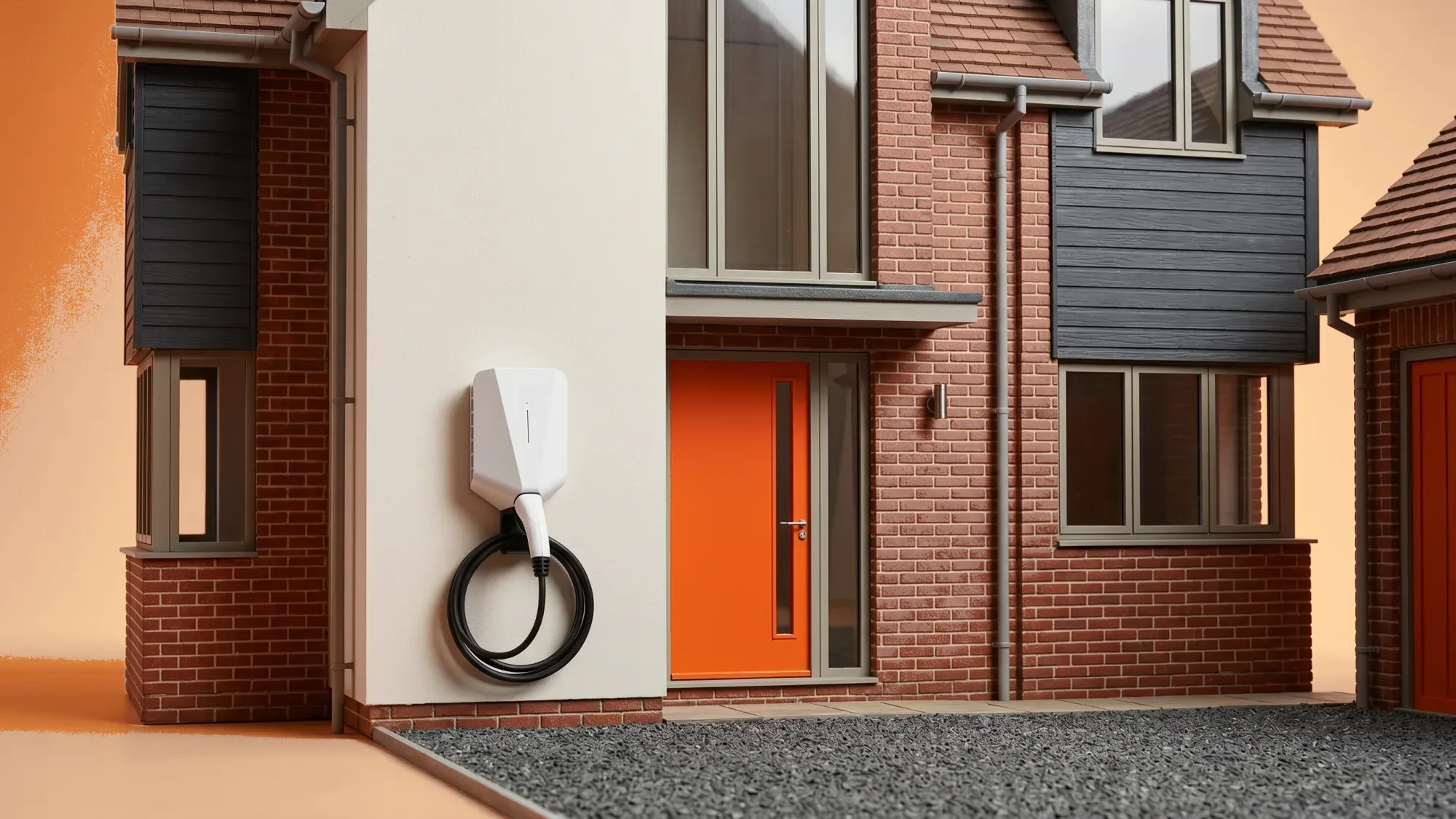
Electric vehicle (EV) ownership is rapidly expanding across the UK, making a clear understanding of charging solutions essential. Understanding the full range of EV charging stations, from understanding different types and speeds to locating available points and managing costs, can feel complex. This article demystifies the process, providing practical insights for confidently managing your EV's energy needs, with a focus on how smart home charging can be the cornerstone of an abundant EV experience.
Managing your EV's energy should be straightforward and cost-effective. Fuse Energy offers clear pricing and smart meter integration to help you optimise your charging. Click here to switch to Fuse Energy today.
Enter your address to get a quote and see how much you could save
Understanding EV charging stations
Knowing the fundamentals of EV charging is crucial for every electric car owner. The UK's charging infrastructure offers a variety of options, each suited to different situations and vehicle capabilities.
Types of EV chargers: speeds and power
EV charging speeds are categorised by their power output, measured in kilowatts (kW), which directly impacts how quickly your vehicle recharges. These categories range from slow, suitable for overnight charging, to ultra-rapid, designed for quick top-ups on longer journeys.
- Slow chargers: These typically deliver power at 3kW to 6kW. They are often found in residential settings or workplaces where vehicles are parked for extended periods. A full charge can take 8-12 hours or more, depending on your EV's battery size.
- Fast chargers: These operate at 7kW to 22kW. A 7kW charger is common for home wallboxes and public on-street charging, providing a full charge in around 6-10 hours. Public fast chargers at 22kW can charge compatible EVs even quicker, often in 2-4 hours.
- Rapid chargers: These deliver power at 50kW or more, significantly reducing charging times compared to slower options. They are typically found at service stations and dedicated charging hubs, offering a substantial charge in 20-60 minutes.
- Ultra-rapid chargers: The fastest available, operating at 100kW or more. These are often rated at 150kW, 200kW, or 350kW. They can add hundreds of miles of range in under 30 minutes for compatible vehicles, ideal for long journeys.
Connector types and compatibility
Understanding connector types ensures your EV can connect to available charging points. The most common types in the UK are:
- Type 2 (mennekes): This is the standard for AC charging in Europe, used for most home and public fast chargers.
- CCS (combined charging system): This is the European standard for DC rapid and ultra-rapid charging, combining a Type 2 inlet with two additional power pins. Most new EVs sold in the UK use CCS.
- CHAdeMO: An older DC rapid charging standard, primarily used by Japanese manufacturers like Nissan and Mitsubishi. While still present, its prevalence is declining in favour of CCS.
The role of smart charging
Smart charging allows your EV to communicate with the charging station and the grid, optimising when and how it charges. This capability enables scheduling charging sessions during off-peak hours when electricity is cheaper and demand on the grid is lower. It also supports grid stability by allowing energy providers to manage demand more effectively. Smart charging puts control into the hands of EV owners, turning energy into a capability they can play with, rather than a cost to be feared.
What is smart charging?
Smart charging is a system that optimises electric vehicle charging by allowing the charger to communicate with the grid and the vehicle. This enables scheduling charging sessions to take advantage of lower electricity prices during off-peak hours, reducing costs for the EV owner and supporting grid stability by balancing demand.
Home EV charging solutions
For most EV owners, home charging is the most convenient and cost-effective option. Setting up a dedicated home charging solution provides daily flexibility and control over your energy use.
Choosing the right home charger
Selecting a home EV charger involves considering your vehicle's compatibility, your home's electricity supply, and your daily driving needs. A 7kW wallbox is a popular choice, offering a good balance of speed and affordability for most households. Look for chargers with smart features that allow scheduling and remote control via an app.
Installation and government grants
Installing a home EV charger typically requires a qualified electrician to ensure it's safely integrated with your home's electrical system. The UK government offers grants to help with the cost of installing home EV charge points, though specific eligibility criteria apply.
For domestic properties, the EV Chargepoint Grant is available for renters and flat owners with private off-street parking, or for households with on-street parking who are installing a cross-pavement solution. This grant can provide up to £500 towards installation costs. Customers must apply for these grants themselves via the gov.UK website; installers do not apply on their behalf.
Integrating with smart energy tariffs
Pairing your home EV charger with a smart energy tariff can unlock significant cost savings. These tariffs offer cheaper electricity rates during off-peak hours, usually overnight, making it ideal for charging your EV while you sleep. The average UK home uses around 2,700 kWh of electricity per year, and an EV can add substantially to this, making tariff optimisation crucial.
The phase-out of Radio Teleswitch Service (RTS) meters began on 30 June 2025, requiring replacement with smart meters. If you have an RTS meter, your current supplier will replace it with a smart meter for free. Once you have a smart meter, you can take full advantage of smart energy tariffs and integrate your home charging with a modern energy supply, contributing to a more efficient and resilient energy system.
Using public charging networks
While home charging covers daily needs, public charging networks are essential for longer journeys and when you're away from home.
Finding public charging stations
Several apps and online maps help you locate public EV charging stations across the UK. These tools often provide real-time information on charger availability, speed, and connector types. Familiarising yourself with these resources is key to confident long-distance EV travel.
Payment methods and apps
Public charging networks often require different apps, RFID cards, or payment methods, which can lead to complexity for users. Some networks offer subscription services, while others allow pay-as-you-go options. It's advisable to download a few key apps and set up accounts before you need to charge on the go.
Rapid vs ultra-rapid charging
When using public networks, choosing between rapid and ultra-rapid charging depends on your urgency and vehicle's capabilities. Rapid chargers (50kW+) are widely available and suitable for a quick top-up during a break. Ultra-rapid chargers (100kW+) offer the fastest charging speeds, ideal for minimising downtime on long trips, but they are less common and typically more expensive.
Optimising your EV charging strategy
A well-planned charging strategy balances convenience, cost, and battery health, ensuring your EV is always ready for the road.
Balancing home and public charging
For most EV owners, home charging should be the primary method due to its lower cost and convenience. Public rapid and ultra-rapid chargers should be reserved for longer journeys or emergencies. This approach maximises savings and reduces reliance on more expensive public options.
Cost-saving tips for EV owners
- Charge at home during off-peak hours: Utilise smart energy tariffs to charge when electricity is cheapest.
- Take advantage of grants: Apply for government grants for home charger installation if you meet the specific eligibility criteria.
- Monitor public charging costs: Be aware of different network pricing and choose the most cost-effective options when public charging is necessary.
- Integrate with smart home energy management: Use apps that provide transparency and control over EV charging within your overall home energy usage.
Battery health and charging habits
Maintaining your EV's battery health can extend its lifespan and performance. While modern EVs have sophisticated battery management systems, general tips include:
- Avoid frequent deep discharges and full charges: Keeping your battery between 20% and 80% for daily use can be beneficial for most electric cars, helping to slow battery degradation. However, always check your vehicle's manufacturer manual for specific recommendations.
- Limit rapid charging: While convenient, excessive rapid charging can generate more heat and potentially degrade the battery faster than slower AC charging.
- Avoid extreme temperatures: Parking your EV in shaded areas during hot weather can help preserve battery health.
The future of EV charging
EV charging is continuously evolving, with exciting advancements on the horizon.
Advancements in charging technology
Innovations like wireless charging, battery swapping, and even faster charging speeds are being developed. These advancements aim to make EV charging even more convenient and integrated into daily life.
Grid integration and Vehicle-to-Grid
The future of EV charging is closely tied to grid integration. Vehicle-to-Grid (V2G) technology allows EVs to not only draw power from the grid but also feed electricity back into it. This can help support grid stability, especially with the increasing adoption of renewable energy sources, and potentially offer financial benefits to EV owners. By integrating smart home charging with a modern energy supply, we move beyond legacy infrastructure towards a more resilient energy system.
Make your EV charging experience simpler and more efficient with Fuse Energy. We offer straightforward tariffs and smart meter integration to help you manage your energy usage and costs effectively. Our 24/7 human customer support is always available to assist you. Switching is quick and easy, allowing you to take control of your home and EV energy bills. Click here to switch to Fuse Energy today. Find out more about our mission to power a sustainable future by clicking here.
Disclaimer
For the avoidance of doubt, this article is provided for informational purposes only and is not intended to constitute legal or financial advice. The author and/or Fuse Energy shall not be responsible for any losses arising out of any reliance on the information contained herein.