Electric car vs petrol car differences explained
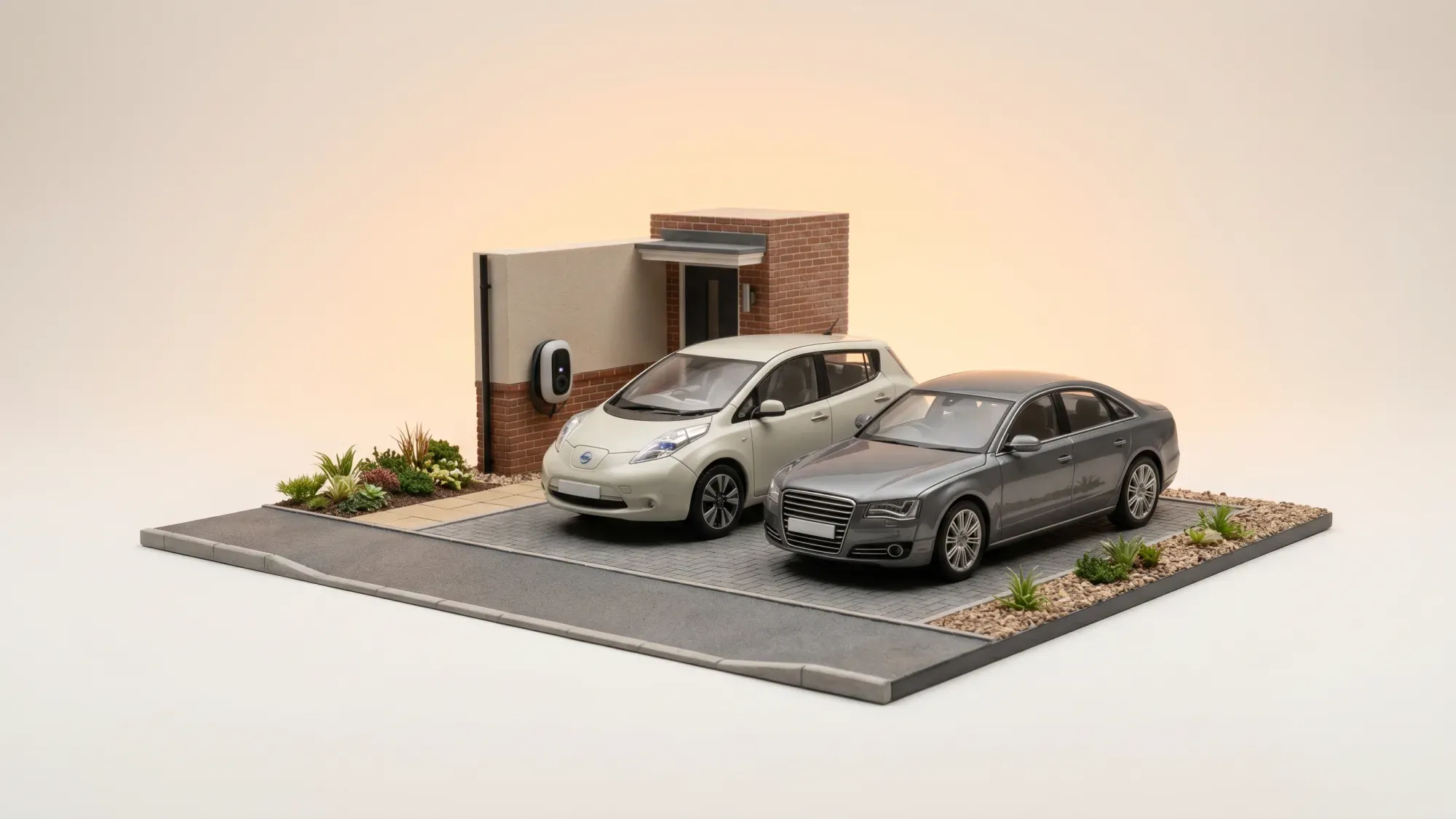
Deciding between an electric car (EV) and a petrol car involves weighing up various factors, from initial purchase price to running costs and environmental impact. This comparison explores the key differences to help you make an informed choice for driving in the UK.
Understanding the costs and benefits of electric cars can help you make a smart choice for your energy. Fuse Energy offers clear pricing and tools to manage your home energy, including smart charging options for your EV. Click here to switch to Fuse Energy today.
Enter your address to get a quote and see how much you could save
Upfront costs: purchase price and depreciation
Initial investment: electric vs petrol
Electric vehicles typically carry a higher upfront purchase price compared to their petrol equivalents. However, this gap is narrowing as EV technology advances and production scales up. In April 2026, the average price of a new electric car listed on Autotrader was £42,620, which was £785 cheaper than the average new petrol model. An increasing number of manufacturers are selling EV and internal combustion engine (ICE) models for similar prices, with some new EVs available for under £20,000. When considering a new vehicle, it is crucial to look beyond the initial sticker price and evaluate the total cost of ownership over the vehicle's lifespan.
Resale value and depreciation trends
Historically, early EV models experienced faster depreciation due to evolving technology and market uncertainty. While electric cars still tend to depreciate faster than petrol equivalents, the gap is narrowing. On average, EVs lose around 61% of their value in the first three years, compared to approximately 47% for equivalent petrol models. Factors like battery health, driving range, charging capability, and strong used EV demand contribute to better value retention.
Running costs: fuel, charging, and maintenance
Comparing fuel and electricity costs
Electric cars are generally cheaper to run per mile than petrol cars. While petrol prices fluctuate, they typically translate to 17p–23p per mile for an average petrol car. In contrast, charging an EV at home can cost as little as 1.5p–2p per mile when utilising off-peak electricity tariffs. Standard rate home charging is around 6p–7p per mile. Public rapid charging, however, is more expensive, averaging around 76p/kWh, which translates to approximately 22p–24p per mile. This makes home charging the most economical option.
The average UK home uses around 2,700 kWh of electricity per year, which is roughly 7.4 kWh per day. This figure provides a baseline for understanding household energy consumption, though EV charging will add to this total.
Maintenance differences
EVs typically have lower maintenance and servicing costs than petrol cars. This is primarily because electric motors have far fewer moving parts than traditional internal combustion engines. There are no oil changes, spark plugs, timing belts, clutches, or exhaust systems to maintain or replace. Additionally, regenerative braking in EVs reduces wear and tear on brake pads and discs, further lowering maintenance expenses. Studies suggest that EV maintenance costs are around 30% lower, on average, than ICE vehicles.
The role of smart charging in EV savings
Smart charging plays a pivotal role in maximising the financial benefits of EV ownership. By allowing drivers to schedule charging during off-peak hours when electricity is cheaper, smart charging significantly reduces running costs. This capability, often managed through a dedicated app, gives drivers real-time visibility and control over their energy consumption. It transforms EV ownership from a simple cost comparison into a strategic advantage, enabling drivers to leverage abundant, cheaper energy and reduce their overall spend. For more information on optimising your charging, consider reading about electric vehicle charging at home.
Tax, incentives, and UK regulations
Vehicle Excise Duty (VED) and benefit in Kind (BiK)
New electric cars were exempt from Vehicle Excise Duty (VED) in the UK until April 2025. However, from 1 April 2025, EVs registered on or after this date will pay £10 for the first year, then the standard rate of £200 annually. EVs registered between 1 April 2017 and 31 March 2025 will pay the standard rate of £200 from 1 April 2026. For expensive cars, the threshold for the additional rate (often referred to as 'luxury car tax') increased from £40,000 to £50,000 for EVs from 1 April 2026. This means many popular family-sized EVs now avoid this extra charge. EVs with an original list price above £50,000 are subject to an additional £440 per year for five years, making the total VED £640 annually.
Benefit in Kind (BiK) tax for electric company cars is another area of significant advantage. For the 2026/27 tax year, the BiK rate for fully electric cars is 4%. This is part of a government plan that sees the rate rising gradually to 5% in 2027/28, 7% in 2028/29, and 9% by 2029/30. This remains substantially lower than the rates for petrol and diesel vehicles, which can be as high as 37%.
Grants for electric vehicles and chargepoints
The UK government continues to offer grants to support EV adoption, particularly for charging infrastructure. The EV Chargepoint Grant for renters and flat owners provides up to £500 towards installing a chargepoint at the property, provided they have private off-street parking. Similarly, the EV Chargepoint Grant for households with on-street parking offers up to £500 for installing a cross-pavement solution. It is important to note that owner-occupiers in a house with private off-street parking are not eligible for any current domestic chargepoint grant. Customers must apply for these grants themselves via gov.UK; the installer does not apply on their behalf.
What is the EV Chargepoint Grant?
The EV Chargepoint Grant is government funding designed to help reduce the cost of installing an electric vehicle charger. The EV Chargepoint Grant for renters and flat owners, and the EV Chargepoint Grant for households with on-street parking, both provide up to £500 towards installation costs for eligible individuals. These grants aim to make home charging more accessible and affordable.
Clean air zones and ULEZ impact
Many UK cities operate Clean Air Zones (CAZ) or Ultra Low Emission Zones (ULEZ) to improve air quality. Petrol cars that do not meet specific emissions standards (typically Euro 4 for petrol and Euro 6 for diesel) may incur daily charges to enter these zones. Electric cars, being zero-Emission vehicles, are fully exempt from ULEZ and all UK CAZ charges. This exemption can lead to significant savings for drivers who regularly travel into affected city centres, potentially saving thousands of pounds annually.
Practical considerations for UK drivers
Range and charging infrastructure
Concerns about EV range and charging infrastructure are becoming less prevalent as technology advances and the network expands. Modern EVs offer increasingly competitive ranges, and the UK's public charging infrastructure is growing rapidly, with over 120,000 public charge points available as of May 2026. While public rapid charging can top up a battery quickly, home charging remains the most convenient and cost-effective option for most daily use. Planning long journeys by checking charger locations and availability can help ensure a smooth trip.
Performance and driving experience
Electric cars offer a distinct driving experience. They provide instant torque, leading to quick acceleration and a responsive feel. EVs are also notably quieter than petrol cars, contributing to a smoother and more peaceful ride. This silent operation not only reduces noise pollution but also enhances driver comfort.
Downsides of switching from EV to petrol
Switching from an EV back to a petrol car means losing out on several key advantages. Drivers would forgo the typically lower per-mile running costs associated with electricity. The favourable tax treatment, such as lower BiK rates for company cars and previous VED exemptions, would also be lost. Furthermore, re-adopting a petrol vehicle would mean incurring charges in CAZ and ULEZ areas, from which EVs are exempt. Some former EV owners have cited issues with home charging installation or higher-than-expected public charging costs as reasons for switching back, highlighting the importance of assessing individual circumstances and charging habits.
Environmental impact and future-proofing
Emissions and air quality
Electric cars produce zero tailpipe emissions, directly contributing to improved local air quality in urban areas. This is a significant advantage over petrol cars, which emit pollutants that contribute to smog and respiratory issues. The widespread adoption of EVs supports cleaner, healthier cities and aligns with broader environmental goals without relying on fear-based framing.
Long-term sustainability
Choosing an EV is a step towards future-proofing your transport choices. With governments globally, including the UK, pushing for a transition away from petrol and diesel vehicles, EVs are at the forefront of sustainable mobility. The ongoing development of renewable energy sources means that the electricity powering EVs is becoming increasingly cleaner, further enhancing their environmental credentials. This shift represents an opportunity for drivers to align with a future where energy is abundant and cleaner.
Making your decision: electric or petrol?
Assessing your driving habits
The choice between an electric and a petrol car ultimately depends on your individual driving habits, typical mileage, and access to charging. If you primarily drive short to medium distances and have access to home charging, an EV is likely to offer significant financial and practical benefits. For those with higher mileage or frequent long journeys, assessing public charging infrastructure along common routes is crucial. Consider how often you drive into urban areas with CAZ, as EV exemptions can provide substantial savings.
Total cost of ownership: a holistic view
When making your decision, focus on the total cost of ownership rather than just the upfront purchase price. This includes factoring in running costs (fuel/charging, maintenance), taxes, incentives, and potential charges like ULEZ. Electric cars often prove more economical in the long run due to lower running and maintenance costs, despite a potentially higher initial outlay.
Managing your energy bills should be clear and easy to understand. Fuse Energy focuses on straightforward pricing, so you can see exactly what you're paying without unnecessary complexity. If you have a smart meter, you can view detailed usage data through the app or website, helping you understand how you can lower your bills. If you don't have a smart meter, Fuse Energy can upgrade your non-smart meter, completely for free. This can make it easier to track spending and make informed decisions about your energy use. Our 24/7 human support team is always on hand with fast response times of under 5 minutes whenever you need help. Click here to switch to Fuse Energy today. Find out about our mission by clicking here.
Disclaimer
For the avoidance of doubt, this article is provided for informational purposes only and is not intended to constitute legal or financial advice. The author and/or Fuse Energy shall not be responsible for any losses arising out of any reliance on the information contained herein.