ECO4 explained: energy grants until December 2026

ECO4 explained: energy grants until December 2026

The ECO4 scheme funds home energy efficiency upgrades - insulation, boiler replacements, heat pumps and more - at little or no cost for low-income and vulnerable households across Great Britain. It runs until 31 December 2026, so eligible households still have time to apply, but the window is closing.

Enter your address to get a quote and see how much you could save

What is the ECO4 scheme?

The ECO4 scheme is a UK government-backed initiative designed to reduce carbon emissions and tackle fuel poverty across Great Britain. It places a legal obligation on large energy suppliers to fund and deliver energy efficiency measures to eligible households. This means that if you qualify, you could receive significant home improvements at little to no cost.

Purpose and objectives

The primary purpose of ECO4 is to help those most in need - specifically low-income, vulnerable, and fuel-poor households - by funding improvements that make homes warmer, more comfortable, and more affordable to run. The scheme is administered by Ofgem on behalf of the Department for Energy Security and Net Zero (DESNZ), ensuring compliance and effective delivery. ECO4 applies to measures installed from 1 April 2022 and is scheduled to run until 31 December 2026, following a nine-month extension.

Key differences from ECO3

ECO4 is the latest iteration of the Energy Company Obligation, replacing the ECO3 scheme which concluded in March 2022. A significant shift in ECO4 is its "whole-house" approach, aiming for a more comprehensive upgrade of a property's energy efficiency rather than single measures. This often means improving a home's Energy Performance Certificate (EPC) rating from D, E, F, or G to at least a C or D.

The eligibility criteria also saw changes, with some benefits previously covered by ECO3 no longer qualifying, while others, like Housing Benefit and Pension Credit Savings Credit, were added. Local Authority Flexible Eligibility (LA Flex) schemes also play a role, enabling more households to access funding through local council referrals.

Who is eligible for ECO4 grants?

Eligibility for ECO4 grants primarily targets households that struggle with energy costs and have less energy-efficient homes. This typically involves a combination of receiving certain benefits and the property's energy performance.

Means-tested benefits criteria

You are likely to be eligible for ECO4 if you or someone in your household receives one of the following means-tested benefits:

  • Universal Credit
  • Pension Credit (Guarantee Credit or Savings Credit)
  • Income-based Jobseeker's Allowance (JSA)
  • Income-related Employment and Support Allowance (ESA)
  • Income Support
  • Working Tax Credit
  • Child Tax Credit
  • Housing Benefit
  • Child Benefit (subject to specific income thresholds)

Property requirements

Beyond benefits, your property itself must meet certain criteria. ECO4 primarily targets homes with low energy efficiency ratings, specifically those with an EPC rating of D, E, F, or G. The scheme aims to improve these properties significantly, often requiring an upgrade to at least an EPC C or D rating. Both homeowners and private tenants (with landlord permission) can apply for the scheme.

Income thresholds (ECO4 Flex)

If your household does not receive any of the qualifying benefits, you might still be able to access ECO4 funding through the ECO4 Flex (Local Authority Flexible Eligibility) scheme. This route allows local authorities, the Scottish and Welsh governments, and energy suppliers to identify households that are vulnerable or on a low income, even without benefit receipt.

What is the income threshold for ECO4 Flex?

For ECO4 Flex, the typical income threshold is a gross annual household income of less than £31,000. This route helps households who may not receive benefits but still struggle with high energy bills or cold homes, or those with health conditions made worse by cold.

Local authorities can also consider other factors, such as specific health conditions that make residents vulnerable to cold, or if the property is in an area identified as experiencing high levels of fuel poverty.

What energy efficiency grants are available?

The ECO4 scheme covers a wide range of measures designed to make your home more energy-efficient, reduce heat loss, and lower your energy bills. The exact package of improvements will depend on a home assessment.

Insulation measures (loft, cavity, solid wall)

Insulation is a cornerstone of the ECO4 scheme, as it directly tackles heat loss and improves a home's thermal performance. Available measures include:

  • Loft insulation: Preventing heat from escaping through the roof.
  • Cavity wall insulation: Filling the gap between external and internal walls to reduce heat transfer.
  • Solid wall insulation: This can be internal or external, crucial for older properties that lack a cavity.
  • Room-in-roof insulation: Improving the insulation of converted loft spaces.

Heating system upgrades (boilers, heat pumps)

Improving or replacing inefficient heating systems is another key component of ECO4. Grants can cover:

  • Boiler upgrades: Replacing old, inefficient boilers with modern, energy-efficient condensing boilers, or installing first-time central heating systems.
  • Heat pumps: Installation of air source heat pumps, which are a low-carbon heating alternative.
  • Storage heaters: Upgrades to more efficient electric storage heaters.

Other renewable technologies

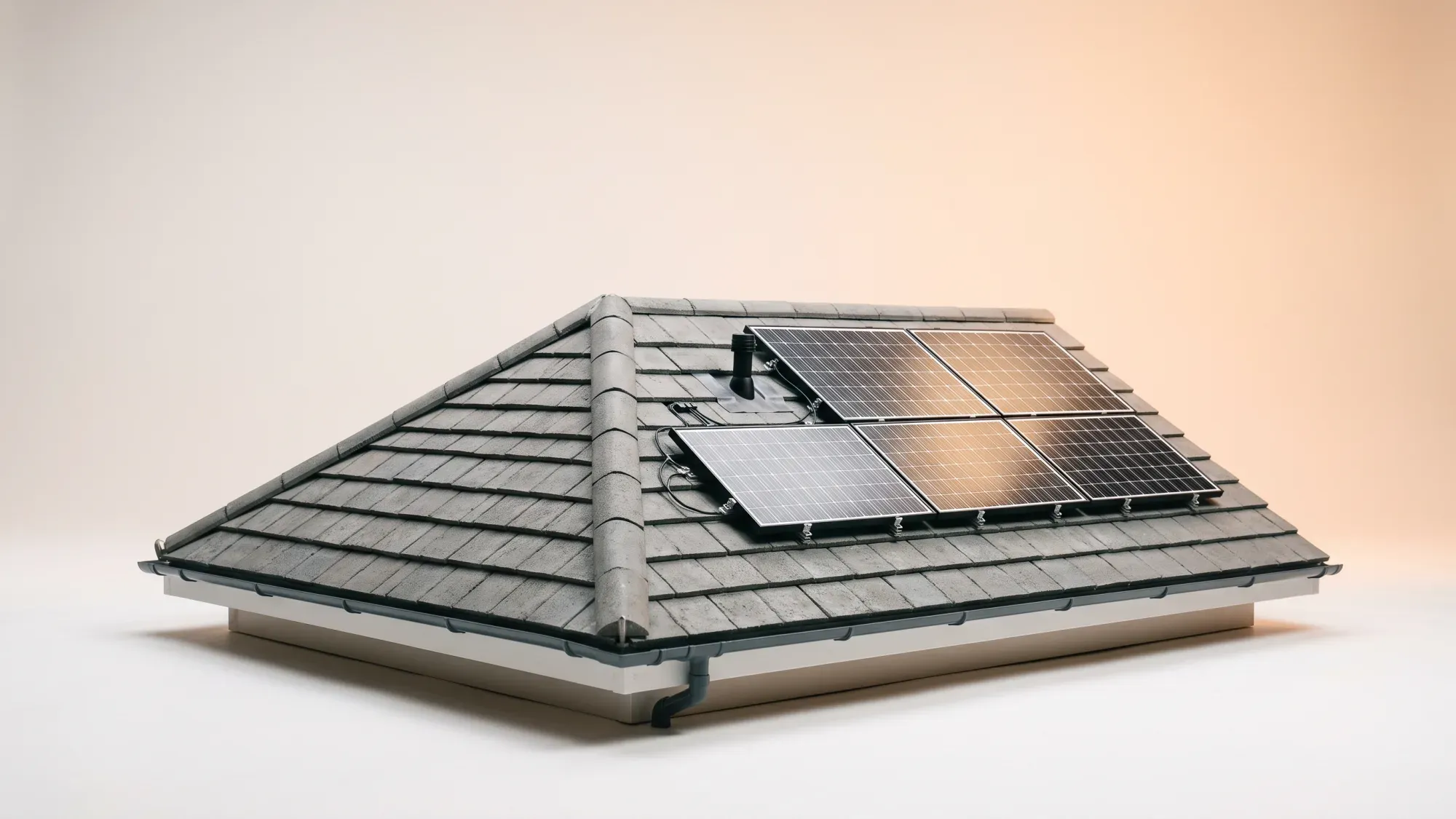
While insulation and heating upgrades are the primary focus, ECO4 can also support the installation of renewable energy technologies. Solar panels (photovoltaic, or PV) are available under the scheme, but typically with specific conditions. For instance, solar PV might be offered if it will reduce your property's heating costs, or for homes that primarily use electricity for heating.

How to apply for ECO4 funding

Applying for ECO4 funding involves a clear process, designed to ensure that the right measures are installed by qualified professionals.

Finding an approved ECO4 installer

The first step is to contact an approved ECO4 provider or installer. It is crucial to ensure that any installer you consider is TrustMark registered. TrustMark is a government-endorsed quality scheme that ensures tradespeople are competent and work to high standards, providing peace of mind for homeowners. For installations involving solar panels or heat pumps, installers should also hold Microgeneration Certification Scheme (MCS) certification. Fuse Energy is both MCS and TrustMark certified for solar panel and heat pump installations.

The application process: step-by-step

The application process typically follows these steps:

  1. Eligibility check: An initial assessment will confirm if you meet the ECO4 criteria based on your benefits or income, and your property's EPC rating.
  2. Gather documentation: You will need to provide necessary documents, such as proof of benefits or income, identification, proof of address, and if renting, landlord permission.
  3. Home assessment: An approved retrofit assessor will visit your home to determine the most suitable energy efficiency measures.
  4. Review and approval: You will review the proposed measures and grant offer. Once approved, the installation can proceed.
  5. Installation: Certified installers will carry out the work, aiming to complete it efficiently and to high standards.

What to expect during a home assessment

During a home assessment, a qualified retrofit assessor will conduct an in-person survey of your property. Their role is to identify which energy efficiency measures would be most effective for your home, taking into account its current condition and aiming to improve its EPC rating. If your property does not already have an EPC, the assessor can conduct one as part of the application process. This ensures that the recommended upgrades are tailored to your home's specific needs.

Benefits of the ECO4 scheme

Participating in the ECO4 scheme offers multiple advantages, directly impacting your household finances, comfort, and the environment.

Reducing energy bills

One of the most immediate and significant benefits of ECO4 is the reduction in energy bills. By making your home more energy-efficient through insulation and upgraded heating systems, you will use less energy to keep it warm, leading to noticeable savings on your heating costs. This can provide much-needed financial relief for low-income households.

Improving home comfort and warmth

Energy efficiency upgrades result in a warmer, more comfortable home environment. Better insulation means fewer draughts and more consistent indoor temperatures, eliminating cold spots. This improved comfort can also lead to health benefits, particularly for vulnerable individuals, by reducing issues like dampness and mould growth.

Contributing to UK carbon reduction targets

Beyond personal benefits, the ECO4 scheme plays a crucial role in the UK's broader environmental goals. By reducing the amount of energy required to heat homes, the scheme significantly lowers carbon emissions. This collective effort contributes to the UK's commitment to reaching net zero carbon emissions, making homes not only more affordable but also more sustainable.

Frequently asked questions about ECO4

How long does ECO4 run?

ECO4 applies to measures installed from 1 April 2022 and runs until 31 December 2026, following a nine-month extension from the original March 2026 end date. The government has confirmed there will be no further extension and no successor supplier obligation, so it is advisable to apply as soon as possible if you believe you are eligible: applications close to the deadline may not be processed in time.

Can I get free solar panels through ECO4?

Yes, it is possible to get solar panels through the ECO4 scheme, but this is usually subject to specific conditions. Typically, solar PV installations are prioritised for homes where they will directly reduce heating costs, or for properties that rely on electric heating systems. An approved installer will assess if solar panels are a suitable measure for your home during the assessment phase.

What if I am not eligible for ECO4?

If you do not meet the standard ECO4 eligibility criteria, you might still qualify through the ECO4 Flex scheme, which allows local authorities to support a broader range of low-income or vulnerable households. The Great British Insulation Scheme (GBIS), which ran alongside ECO4, closed on 31 March 2026, but the government's Warm Homes: Local Grant now offers energy efficiency upgrades and low-carbon heating to eligible low-income households in England through participating local authorities. It is worth exploring these options if you are looking to improve your home's energy efficiency.

Published on 23 Jul 2026

Share

Disclaimer

For the avoidance of doubt, this article is provided for informational purposes only and is not intended to constitute legal or financial advice. The author and/or Fuse Energy shall not be responsible for any losses arising out of any reliance on the information contained herein.