Dual car charger for your home
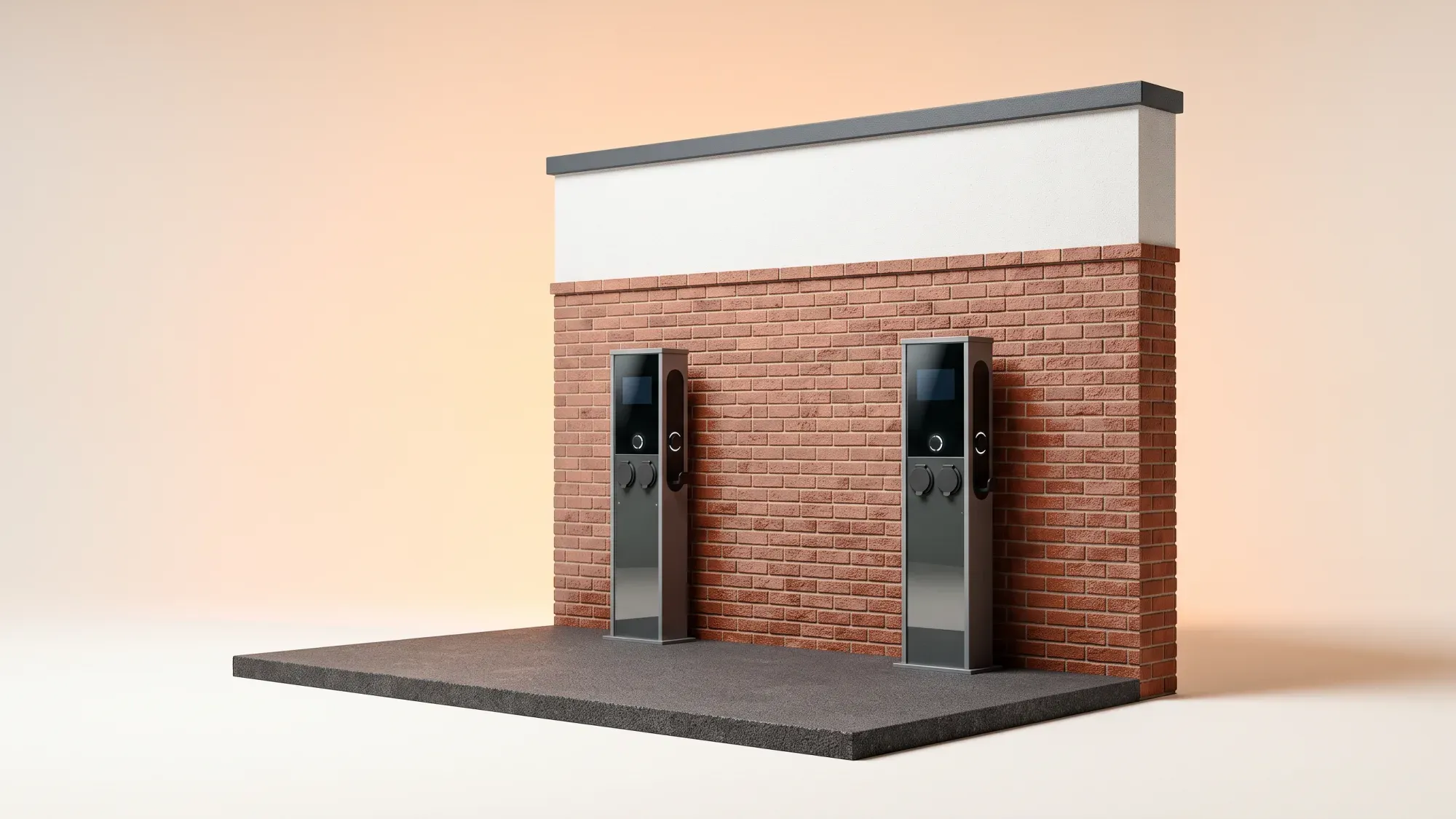
Charging two electric vehicles (EVs) at home does not have to mean doubling your effort or expense. A dual car charger allows you to power up both cars simultaneously or sequentially from a single unit, transforming how you manage your home energy. This guide will walk homeowners through selecting, installing, and optimising a dual car charger, turning a potential chore into a strategic advantage.
Managing your home energy, especially with electric vehicles, should be straightforward. Fuse Energy offers clear pricing and tools to help you understand and control your energy use. Click here to switch to Fuse Energy today.
Enter your address to get a quote and see how much you could save
What is a Dual EV charger and why consider one?
A Dual EV charger is a single charging unit equipped with two charging cables or sockets, designed to charge two electric vehicles. For households with multiple EVs, this means greater convenience and efficiency, avoiding the need for two separate installations. It is a strategic move that puts you in control of your energy consumption.
Charging two electric vehicles at home
Many UK households now own more than one electric vehicle, increasing the demand for efficient home charging solutions. The challenge of charging both vehicles without hassle becomes apparent when relying on a single charger, often leading to inconvenient schedules or a scramble for the charging cable. A Dual EV charger simplifies this by providing a dedicated solution, allowing both cars to be charged from one unit. You can set charging schedules for each vehicle, ensuring both are ready when needed, often leading to better energy management. For a broader understanding of EV charging at home, explore our detailed guide.
Benefits for multi-EV households
Dual EV chargers allow two electric vehicles to charge simultaneously or sequentially from a single unit, optimising home energy use. This eliminates the need for multiple charging points, reducing clutter and simplifying your home setup. Beyond convenience, a dual electric car charger can help manage energy costs by enabling smart charging features that utilise off-peak tariffs. This means you can power up both vehicles when electricity is cheaper, without having to manually switch cables or wake up early.
Types of Dual EV chargers
Understanding the different types of Dual EV chargers available is crucial for making an informed decision. Each option offers distinct advantages depending on your preferences and vehicle needs.
Tethered vs untethered options
Dual EV chargers come in both tethered and untethered variants. A tethered charger has one or two cables permanently attached, offering convenience as you do not need to retrieve your car's charging cable each time. However, the cable type (Type 1 or Type 2) and length are fixed. An untethered Dual EV charger, on the other hand, provides two sockets, allowing you to use your vehicle's own charging cables. This offers greater flexibility if your household has vehicles with different connector types or if you prefer to use specific cables.
Power output and charging speeds
The power output of a double car charger directly impacts charging speeds. A common power output for home chargers is 7kW, which is suitable for overnight charging for most EVs. Some dual units can distribute this power between two vehicles, meaning each car charges at a slower rate if both are plugged in simultaneously. Others might offer dynamic load balancing, intelligently adjusting power delivery to each vehicle based on their state of charge and your home's available electrical capacity. Consider your daily mileage and how quickly you need your vehicles charged when assessing power output.
Smart features and connectivity
Modern dual car chargers are often equipped with smart features and connectivity options. These can include Wi-Fi or cellular connectivity, allowing you to control and monitor your charging sessions via a smartphone app. Smart charging features, often integrated with home energy management systems, can help manage energy costs by charging during off-peak hours. This means you can schedule charging for both vehicles to take advantage of cheaper electricity rates, ensuring your EV is always ready without worrying about peak tariffs.
What is dynamic load balancing in an EV charger?
Dynamic load balancing is a smart feature that allows an EV charger to adjust its power output based on your home's real-time electricity consumption. This prevents overloading your electrical supply by ensuring the charger never draws more power than your home can safely provide, even when charging two vehicles simultaneously.
Installation requirements and considerations
Professional installation is crucial for home EV chargers to ensure safety, compliance with UK electrical regulations, and optimal performance. This is especially true for a dual car charger setup.
Assessing your home's electrical capacity
Before installing a dual car charger, it is essential to assess your household's electrical capacity. Charging two electric vehicles simultaneously can place a significant demand on your home's electrical supply. Overlooking the electrical capacity of your home can lead to potential circuit overloads or the need for costly electrical upgrades. A qualified electrician will be able to evaluate your existing consumer unit and main fuse to determine if it can safely support the additional load.
Professional installation and safety standards
All EV chargepoint installations in the UK must comply with BS 7671 (IET Wiring Regulations) and local building regulations. Professional installation ensures that your dual electric car charger is fitted safely and legally. An Office for Zero Emission Vehicles (OZEV)-approved installer will have the necessary expertise to carry out the work, provide a certificate of compliance, and ensure your setup meets all safety standards. This not only protects your home and vehicles but also ensures your warranty remains valid.
Location and practicality
Consider the optimal location for your double car charger. It should be easily accessible for both vehicles, ideally within reach of their charging ports without needing to park in awkward positions. Think about cable management, especially for tethered units, to avoid trip hazards. Weather protection for the unit itself and sufficient lighting for night-time charging are also practical considerations.
Costs, grants, and smart energy management
Understanding the financial aspects and how to leverage smart technology can make Dual EV charging more affordable and efficient.
Understanding dual charger costs
The cost of a dual car charger varies depending on the brand, features, power output, and whether it is tethered or untethered. Installation costs will also factor in, influenced by the complexity of the electrical work required and the distance from your consumer unit to the chargepoint location. While the initial outlay might be higher than a single charger, the long-term convenience and potential energy savings can make it a worthwhile investment for multi-EV households.
OZEV EV Chargepoint Grant eligibility
The OZEV offers several EV chargepoint grants designed to help with the cost of installing electric vehicle chargepoints at domestic properties. For example, the EV Chargepoint Grant for renters and flat owners can provide up to £500 towards the cost of installation. This grant is available to those who own and live in a flat, or rent any residential property, provided they have private off-street parking. The customer must apply for the grant themselves via the GOV.UK website.
Optimising charging with smart technology
Smart meters can enable access to time-of-use tariffs that can significantly reduce the cost of EV charging. Dual-rate tariffs, which offer cheaper electricity during off-peak hours, require either a smart meter or a multi-register (dual-rate) manual meter. By integrating your Dual EV charger with a smart meter and scheduling charging during these cheaper periods, you can dramatically cut your electricity bills. The average UK home uses around 2,700 kWh of electricity per year, so managing significant EV charging on top of this requires smart solutions to avoid high energy costs. Fuse's app can connect with existing EV chargers to support eligible dual-rate variable tariff usage patterns. If you connect your electric vehicle to the app, you can also monitor its state of charge.
Choosing the right dual charger for your needs
Selecting the ideal dual car charger involves weighing several factors to match your household's specific requirements.
Key factors to compare
When comparing dual electric car chargers, consider:
- Power output: Does it offer sufficient charging speed for both vehicles?
- Tethered or untethered: Which option best suits your vehicles and convenience preferences?
- Smart features: Does it offer app control, scheduling, and integration with home energy management systems?
- Durability and warranty: Look for robust units with good manufacturer warranties.
- Installer compatibility: Ensure the charger is compatible with OZEV-approved installers.
- Budget: Balance features with your financial constraints.
Future-proofing your home charging setup
Investing in a dual car charger is an opportunity to future-proof your home charging setup. Consider models that offer over-the-air software updates to ensure compatibility with new EV models and evolving smart home technologies. Choosing a charger that can integrate seamlessly with a broader home energy management system will allow you to adapt to future energy tariffs and potentially incorporate solar panels or battery storage down the line. This approach ensures your home charging solution remains efficient and relevant for years to come.
Maximising your home's energy potential
A Dual EV charger is more than just a convenience; it is a component of a larger strategy to take control of your home energy.
Integrating with your home energy system
Dual EV chargers can integrate with your home energy system. When connected to the Fuse app, they can support eligible dual-rate variable tariff usage patterns. This helps you manage charging for your electric vehicles, aiming to ensure both cars are ready without worrying about peak tariffs.
Long-term savings and convenience
By carefully selecting and integrating a dual car charger into your home, you unlock significant long-term savings and unparalleled convenience. Smart charging capabilities, combined with dynamic tariffs, allow you to minimise running costs. The ability to charge two vehicles simultaneously or sequentially from a single unit streamlines your daily routine, eliminating the hassle of juggling cables or waiting for a single charging slot. This abundance of charging capability grants you the power to play with your energy, making your EV ownership experience truly effortless.
Take the stress out of managing your home's energy, especially with multiple electric vehicles. Fuse Energy offers clear pricing and tools to help you understand and control your energy use, making it easier to manage your EV charging. Our 24/7 human support team is always on hand with fast response times whenever you need help. Click here to switch to Fuse Energy today and start optimising your home charging. We believe in a future with power to play with. Find out more about our mission to make energy abundant by clicking here.
Disclaimer
For the avoidance of doubt, this article is provided for informational purposes only and is not intended to constitute legal or financial advice. The author and/or Fuse Energy shall not be responsible for any losses arising out of any reliance on the information contained herein.