Do you need planning permission for solar panels?
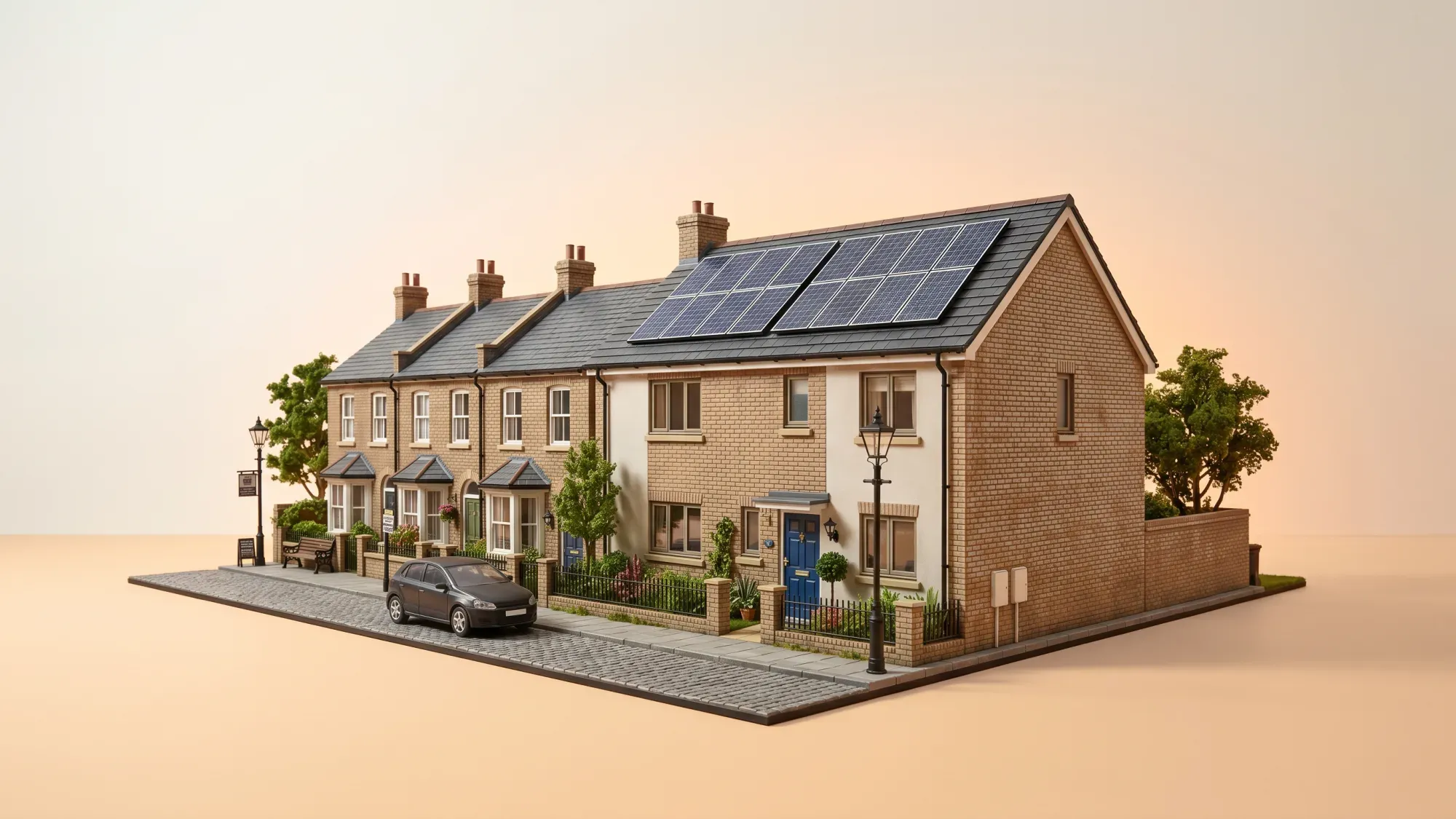
Installing solar panels can significantly reduce your energy bills and carbon footprint, but understanding the planning permission rules can seem daunting. The good news is that most domestic solar panel installations in England do not require a full planning application, falling instead under 'permitted development rights'. However, specific conditions apply, and understanding these is crucial to avoid legal non-compliance or unnecessary delays.
Understanding permitted development rights for solar panels
What are permitted development rights?
Permitted development rights (PDR) are a national grant of planning permission, allowing certain types of development to proceed without needing to apply to the local planning authority. For homeowners, this means many common home improvements, including solar panel installations, can be carried out without a full planning application, provided specific conditions and limitations are met. These rights aim to simplify the process and encourage developments like renewable energy installations.
General conditions for solar PV installations
While PDR streamline the process, they are not a free pass. To qualify, your solar panel installation must meet several general conditions. These typically relate to the visual impact of the panels on the property and the surrounding area. The equipment must be sited, as far as practicable, to minimise its effect on the building's appearance and the amenity of the area. If the panels are no longer needed, they must be removed as soon as practicable.
Roof and wall mounted solar panels: specific conditions
Most roof-mounted solar panel installations on houses in England are considered permitted development. However, certain limits apply to how the panels are installed.
Projection and height limits
For solar panels on pitched roofs or walls, they must not protrude more than 200mm from the surface they are installed on. In practice, most modern panel and mounting systems easily meet this requirement when installed parallel to the roof surface. Additionally, the highest part of the solar panel installation must not be higher than the highest part of the roof, excluding chimneys.
Proximity to roof edges
While there isn't a universal strict PDR limit for how close panels can be to the edge of a pitched roof, the general condition of minimising visual impact applies. It's good practice to consider the positioning carefully to ensure the installation blends well with the property's structure.
Rules for flat roofs
Rules for solar panels on flat roofs were significantly relaxed in December 2023. Now, solar panels on flat roofs can protrude up to 600mm above the roof surface without needing planning permission. The highest part of the solar equipment must be no more than 600mm above the highest part of the roof, excluding chimneys. Panels should also be at least one metre from any external edge of the roof.
Ground mounted solar panels: what you need to know
Ground-mounted solar panels, often installed in gardens, also have specific permitted development criteria that differ from roof-mounted systems.
Height and boundary restrictions
For ground-mounted solar, the installation must not exceed four metres in height at any point. However, graduated height limits apply closer to a boundary: if any part of the array is within five metres of a boundary, the maximum height drops to two metres. If it is within five metres of the boundary and positioned in front of the principal elevation (the front wall of the house), the maximum height is capped at one metre. The installation must also be positioned at least five metres from any boundary of the property.
Coverage limits
Under permitted development, only one standalone ground-mounted solar installation is permitted per property. The total surface area of the panels themselves must not exceed nine square metres. No single dimension (length, width, or depth) of the array can exceed three metres. These restrictions can be a significant constraint for smaller gardens.
Special considerations: conservation areas and listed buildings
While many solar installations fall under permitted development, certain locations and property types have stricter rules.
Solar panels in conservation areas
If your property is in a conservation area, or a World Heritage Site, panels must not be fitted to a wall, balcony, or roof enclosure which fronts a highway. This means that while solar panels are not automatically prohibited in conservation areas, additional restrictions apply. In some cases, prior approval from the local planning authority may be required, especially for flat roofs. It's always best to check with your local planning authority for specific guidance.
Listed buildings and their curtilage
Installations on listed buildings or within the curtilage of a listed building (the land immediately surrounding it) always require full planning permission. In addition, listed building consent is required. These applications are assessed on a case-by-case basis, considering the impact on the building's special architectural or historic interest.
Areas of Outstanding Natural Beauty and national Parks
Properties located in designated areas such as Areas of Outstanding Natural Beauty (AONBs) or National Parks also have stricter planning controls. While permitted development rights may still apply, they are often more limited, and you may need to seek full planning permission or prior approval for solar panel installations.
When full planning permission is required
Full planning permission is necessary when your proposed solar panel installation does not meet the conditions for permitted development rights.
Exceeding permitted development limits
If your planned installation exceeds any of the size, height, projection, or siting limits outlined for permitted development, you will need to submit a full planning application to your local council. This includes scenarios such as panels protruding more than 200mm from a pitched roof, or ground-mounted arrays larger than nine square metres.
Non-domestic and agricultural buildings
For non-domestic and agricultural buildings, the rules can be more complex. Rooftop solar panels on agricultural buildings can often be installed under permitted development rights if the building is genuinely used for agriculture and specific conditions are met. For roof-mounted panels on agricultural buildings, they should project no more than 200mm from the surface. For flat roofs on agricultural buildings, the highest part of the equipment should not be more than one metre above the highest part of the roof (excluding chimneys). Equipment mounted on a roof must also not be within one metre of the external edge of that roof.
Changes in November 2023 removed previous generation limits for rooftop solar on non-domestic buildings, meaning larger arrays can now be installed without planning permission, provided other conditions are met. However, ground-mounted solar on agricultural land is more restricted, and commercial-scale systems almost always require full planning permission. Even where permitted development applies, prior approval from the local planning authority may still be required for agricultural installations.
Beyond planning: navigating building regulations
Separate from planning permission, all solar panel installations must comply with relevant Building Regulations. These regulations ensure the safety and structural integrity of your property and the installation itself.
Structural integrity and safety
Building Regulations cover the structural integrity of your roof, ensuring it can safely support the additional weight of the solar panels. Your installer must prove that your roof can comfortably support the system. If you fall foul of building regulations, your solar panels can be forcibly removed, and you could face an unlimited fine.
Fire safety and electrical standards
Fire safety is another critical aspect addressed by Building Regulations. This includes using approved materials and ensuring sufficient ventilation around the panels to prevent overheating. Electrical safety standards (Part P) are also paramount, ensuring all electrical connections are safe and installed correctly. Reputable installers who are members of an approved Competent Persons Scheme can self-certify that their work complies with Building Regulations, meaning you typically do not need to make a separate application yourself.
Disclaimer
For the avoidance of doubt, this article is provided for informational purposes only and is not intended to constitute legal or financial advice. The author and/or Fuse Energy shall not be responsible for any losses arising out of any reliance on the information contained herein.