Do air fryers use a lot of electricity?
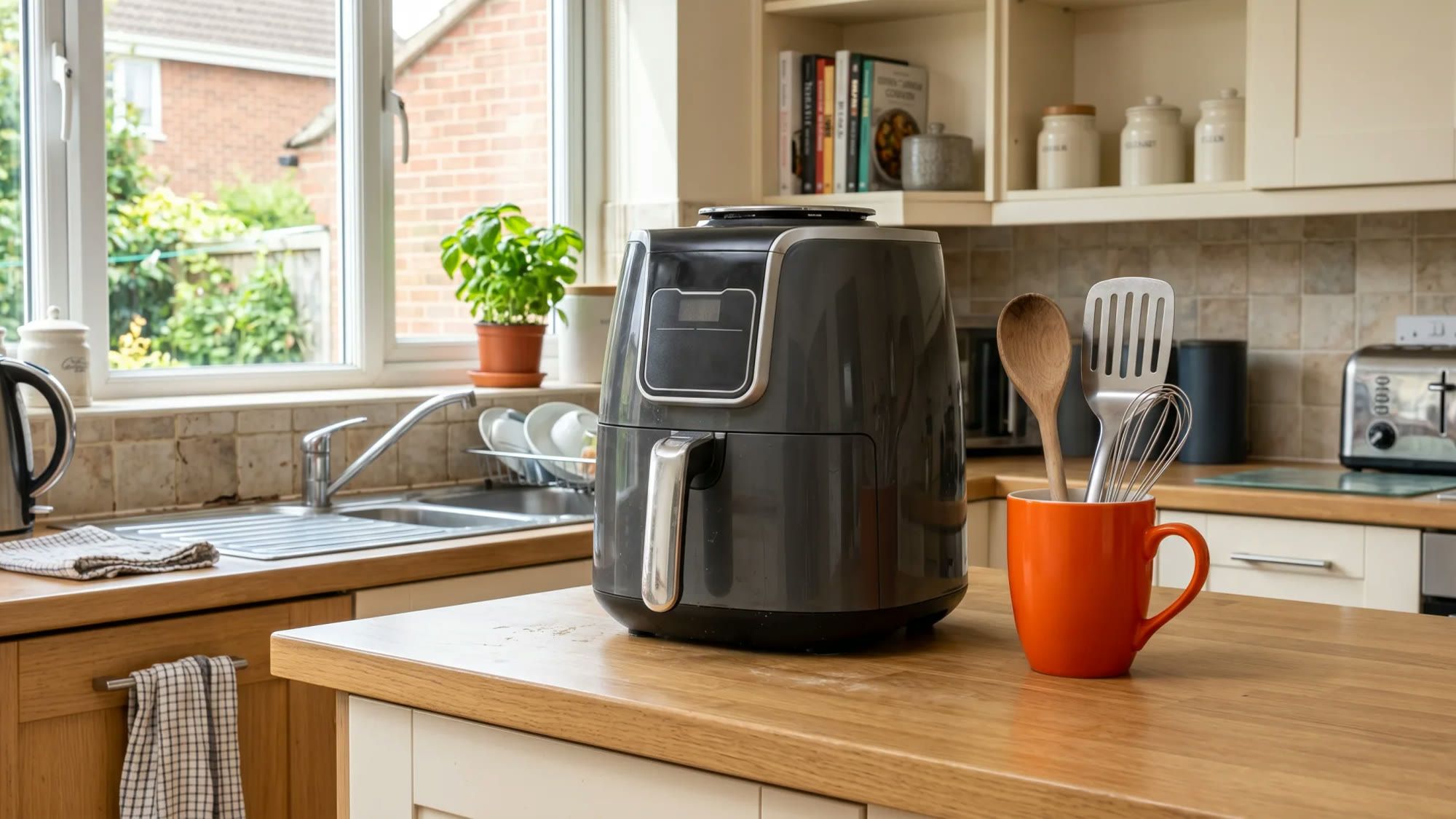
Air fryers generally consume less electricity per use than conventional ovens for smaller cooking tasks, making them an energy-efficient choice for many UK households looking to manage their energy bills. The actual cost depends on the appliance's wattage, how long it is used, and your specific electricity unit rate.
Making smart choices about your kitchen appliances can significantly impact your household budget. Fuse Energy helps you understand your energy usage with clear pricing and in-app data, empowering you to make informed decisions. Click here to switch to Fuse Energy today.
Enter your address to get a quote and see how much you could save
Understanding air fryer energy consumption
Understanding how much electricity your air fryer uses is the first step to making informed choices about your kitchen energy consumption. It is not just about the wattage, but how that power is applied.
What is an air fryer and how does it work?
An air fryer is a compact kitchen appliance that cooks food by circulating hot air around it. It works much like a convection oven, but on a smaller scale and often with more intense, rapid air circulation. This process creates a crispy texture similar to deep-frying, but with significantly less oil. The heating element quickly brings the internal temperature up, and a fan distributes the heat evenly, cooking food efficiently.
Typical wattage of air fryers
Most air fryers operate within a power range typically between 1,200 and 2,200 watts (1.2 to 2.2 kW), depending on the model and size. This wattage indicates how much power the appliance draws when it is running. Larger air fryers or those with more advanced features might have slightly higher wattages, while smaller, more basic models could be at the lower end of this spectrum.
Factors influencing electricity use
Several factors determine how much electricity your air fryer actually consumes:
- Wattage: A higher wattage air fryer will use more electricity per hour than a lower wattage one if both run for the same duration.
- Duration of use: The longer you cook, the more electricity is consumed. Air fryers often cook food faster than conventional ovens, which can offset their wattage.
- Temperature settings: While the air fryer will draw its maximum wattage to reach the set temperature, maintaining that temperature might require less power cycling, though this is usually accounted for in overall consumption.
- Model and efficiency: Different brands and models can have varying levels of energy efficiency in their design and insulation.
Air fryer versus oven: a cost comparison
When looking to save on energy bills, comparing your cooking appliances is crucial. Air fryers often come out favourably against traditional ovens for many everyday tasks.
Why air fryers can be more efficient
Air fryers are typically more energy-efficient than conventional ovens for several reasons. Their smaller cooking cavity means they heat up much faster and require less energy to maintain temperature. They also circulate hot air more directly around the food, leading to quicker cooking times. Air fryers can often cook food 20-30% faster than a standard oven, and preheat in a matter of minutes, if at all. This combination of faster heating and quicker cooking often results in lower overall electricity consumption per meal.
Calculating the running cost of an air fryer
To work out how much your air fryer costs to run, you need two pieces of information: its power rating in kilowatts (kW) and your electricity unit rate in pence per kilowatt-hour (kWh).
The formula is: (Appliance wattage in kW) x (Hours of use) x (Electricity unit rate in pence per kWh) = Cost in pence
For example, a 1.5 kW air fryer used for 30 minutes (0.5 hours) at an illustrative electricity rate of 26.11p per kWh would cost: 1.5 kW x 0.5 hours x 26.11 p/kWh = 19.58 pence.
Comparing costs with a conventional electric oven
A typical electric oven can range from 2 kW to 5 kW or more, and it takes a longer time to preheat and cook food. For smaller meals or single portions, heating a large oven is often less efficient than using a compact air fryer. While an oven might be necessary for larger roasts or multiple dishes, for everyday items like chips, chicken breasts, or vegetables, the air fryer's speed and smaller size usually mean it uses less electricity overall.
How much does your air fryer cost to run?
Let us break down the actual costs with some real-world examples and consider how different factors influence your bill.
Example calculations for common air fryer models
Using the average UK electricity unit rate of 26.11p per kWh, here is what you might expect for illustrative purposes:
- 1.5 kW air fryer for 15 minutes (0.25 hours): 1.5 kW x 0.25 h x 26.11 p/kWh = 9.79 pence
- 1.5 kW air fryer for 30 minutes (0.5 hours): 1.5 kW x 0.5 h x 26.11 p/kWh = 19.58 pence
- 1.8 kW air fryer for 30 minutes (0.5 hours): 1.8 kW x 0.5 h x 26.11 p/kWh = 23.50 pence
These figures illustrate that even with frequent use, the cost per session is relatively low, especially when compared to the longer running times of a full-sized oven.
Impact of electricity unit rates on running costs
Your specific electricity unit rate has a direct impact on how much your air fryer costs to run. Rates can vary depending on your energy supplier, tariff type (e.g., fixed or variable), and even the time of day if you are on a time-of-use tariff. While 26.11p per kWh is a useful illustrative example, checking your latest energy bill for your actual unit rate will give you the most accurate cost estimate. Understanding your energy bill can help you identify your exact unit rate.
How do I find my electricity unit rate?
Your electricity unit rate is typically listed on your energy bill, often in pence per kilowatt-hour (p/kWh). It is the price you pay for each unit of electricity you consume. This rate can vary based on your supplier, tariff, and region, so checking your latest statement is the most accurate way to find it.
Specific brands: Ninja, Salter, and halogen air fryers
Whether you own a popular Ninja Foodi, a Salter model, or a halogen air fryer, the underlying principle of electricity consumption remains the same: it is all about wattage and usage time.
- Ninja air fryers: These are popular and often come with various features. Their wattage typically falls within the 1,500W to 2,500W range, depending on the model and capacity. A larger, dual-drawer Ninja air fryer might have a higher wattage than a compact single-drawer unit.
- Salter air fryers: Salter offers a range of air fryers, usually with wattages between 1,000W and 2,400W. They are generally efficient for their size.
- Halogen air fryers: These older-style air fryers use a halogen lamp as the heating element. Their wattages are often similar to conventional air fryers, typically ranging from 1,300W to 1,500W. While effective, they might not always be as energy-efficient as newer convection-based air fryers due to differences in heat distribution.
Regardless of the brand or type, checking the appliance's specific wattage (usually found on a label on the back or bottom, or in the manual) is the best way to calculate its potential running cost.
Tips for energy-efficient air fryer use
Even with an efficient appliance like an air fryer, there are ways to optimise its use and save even more electricity.
Preheating and batch cooking strategies
- Preheating: Most air fryers preheat very quickly, often in just 2-5 minutes. Only preheat when the recipe specifically calls for it, as some foods do not require it.
- Batch cooking: If you are cooking multiple items that require similar temperatures, consider cooking them in batches rather than heating the air fryer multiple times for small amounts. This maximises the use of the heat generated.
Optimal food placement and capacity
- Do not overcrowd: Overfilling the air fryer basket can prevent hot air from circulating properly, leading to uneven cooking and potentially longer cooking times as you might need to run it for longer or in multiple cycles. Cook in a single layer where possible.
- Cut food evenly: Uniformly sized pieces of food will cook more evenly and quickly, avoiding the need for extended cooking times for larger pieces.
Maintenance for efficiency
- Keep it clean: Regularly cleaning your air fryer, especially the heating element and fan area, ensures it operates efficiently. Grease and food debris can hinder airflow and make the appliance work harder.
- Check seals: Ensure the drawer or lid seals properly to prevent heat from escaping, which would reduce efficiency.
Making smart energy choices in your kitchen
Understanding your air fryer's energy use is just one part of a larger picture. Making smart choices across all your kitchen appliances can significantly impact your household budget.
Beyond the air fryer: broader energy management
Consider the energy consumption of other kitchen appliances. Microwaves are excellent for reheating and small tasks, while slow cookers use very little electricity over long periods. For boiling water, a kettle is far more efficient than a hob. By matching the appliance to the task, you can minimise energy waste. For larger meals, a conventional oven might be the only option, but for everyday cooking, smaller, more efficient appliances are often the better choice. You can find more general energy-saving tips for your home here.
Empowering your household energy decisions
Knowing how much electricity your appliances use empowers you to make conscious decisions about your energy consumption. It is about using energy smarter, not necessarily using less. By understanding the costs involved and implementing energy-saving tips, you can take control of your household budget and cook efficiently without fear of the bill. This knowledge turns energy management into a strategic advantage for your home.
Managing your energy bills should be clear and easy to understand. Fuse Energy focuses on straightforward pricing, so you can see exactly what you are paying without unnecessary complexity. If you have a smart meter, you can view detailed usage data through the app or website, helping you understand how you can lower your bills. Our 24/7 human support team is always on hand with fast response times whenever you need help. Click here to switch to Fuse Energy today. Find out about our mission by clicking here.
Disclaimer
For the avoidance of doubt, this article is provided for informational purposes only and is not intended to constitute legal or financial advice. The author and/or Fuse Energy shall not be responsible for any losses arising out of any reliance on the information contained herein.