Bidirectional charging for an EV home powerhouse
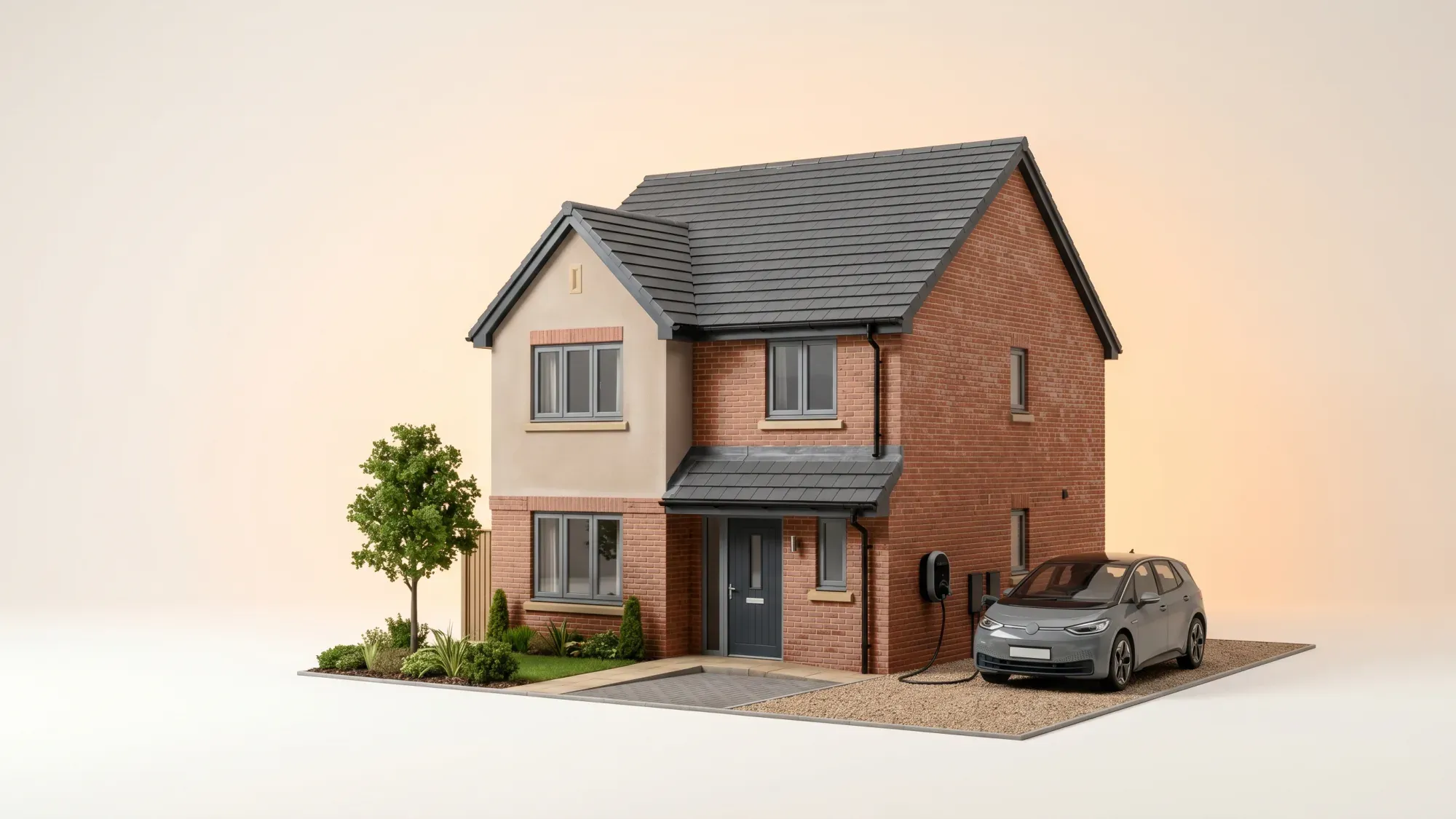
An electric vehicle (EV) is more than just transport; it is a powerful energy asset that could revolutionise how you manage your home's electricity. Bidirectional charging allows an EV to not only draw power from the grid but also to send it back, transforming the car into a flexible, mobile battery for your home and even the National Grid. This technology offers UK EV owners a strategic "power play" for greater energy independence and potential savings on their electricity bills.
While bidirectional charging offers exciting possibilities for energy management, ensuring you are on the right energy tariff is key to maximising savings. Switch to Fuse Energy today for clear pricing and smart energy solutions. Click here to get started.
Enter your address to get a quote and see how much you could save
What is bidirectional charging?
Bidirectional charging is a clever technology that enables a two-way flow of electricity between an electric vehicle and an external source. Unlike traditional, unidirectional charging, which only allows power to flow into an EV's battery, bidirectional charging lets energy move both in and out. This means an EV can act as a large, mobile energy store, capable of supplying power back to a home, other devices, or even the National Grid.
Understanding two-way energy flow
The core idea behind bidirectional charging is simple: an EV's battery is a significant energy reservoir. Instead of merely consuming electricity, it can also release it. This two-way energy flow is managed by a special charger and inverter system that converts the direct current (DC) stored in the EV battery into alternating current (AC) suitable for household use or export to the grid. This capability transforms an EV into a flexible energy storage unit for homes or the wider electricity grid.
What is the main difference between unidirectional and bidirectional charging?
Unidirectional charging allows electricity to flow only one way, from the grid to the EV battery. Bidirectional charging, however, enables a two-way flow, meaning power can go into the EV battery and also come out of it to power a home or feed back into the grid.
Key components of a bidirectional system
Implementing bidirectional charging requires several key components. At its heart is a compatible bidirectional EV charger, often referred to as a Vehicle-to-Grid (V2G) or Vehicle-to-Home (V2H) charger. This unit contains an inverter that handles the DC-to-AC conversion. You also need an electric vehicle that supports bidirectional charging, as not all models are currently equipped for this technology. Finally, a home energy management system (HEMS) often integrates these components, optimising when to charge or discharge based on energy prices, household demand, and grid signals.
How bidirectional charging benefits UK EV owners
Bidirectional charging offers tangible benefits for UK EV owners, extending beyond simply powering their vehicles. It provides opportunities for significant cost savings, increased energy independence, and even a way to support the national electricity infrastructure.
Reducing energy bills with smart management
One of the most compelling advantages of bidirectional charging is its potential to reduce household energy bills. By intelligently discharging power from their EV during peak electricity price periods and recharging during off-peak times, homeowners can minimise their reliance on expensive grid electricity. This strategy, especially when combined with time-of-use tariffs, allows EV owners to save money by selling excess energy back to the grid or powering their homes during peak times.
Increasing home energy independence
For many, the ability to use their EV as a home battery offers a new level of energy independence. In the event of a power cut, a bidirectional-enabled EV can provide backup power to the home, keeping essential appliances running. This resilience is particularly appealing in areas prone to grid interruptions. Furthermore, when paired with renewable energy sources like solar panels, an EV can store surplus solar generation, reducing reliance on the grid even further.
Supporting the National Grid (V2G)
Bidirectional charging, particularly through Vehicle-to-Grid (V2G) applications, allows EV owners to contribute to the stability of the National Grid. By discharging power during periods of high demand or low renewable generation, and recharging when supply is abundant, EVs can help balance the grid. This not only supports the wider energy system but can also unlock financial incentives for participating EV owners.
Vehicle-to-Home (V2H) vs Vehicle-to-Grid (V2G) vs Vehicle-to-Load (V2L)
Bidirectional charging encompasses several distinct applications, each offering unique benefits for managing energy.
Powering your home (V2H)
Vehicle-to-Home (V2H) technology allows an EV to supply electricity directly to a household. This is particularly useful for reducing reliance on grid power during expensive peak hours or providing emergency backup during outages. Imagine your EV powering your lights and appliances when the grid goes down - V2H makes this a reality.
Contributing to the grid (V2G)
Vehicle-to-Grid (V2G) takes V2H a step further by enabling an EV to export electricity back to the main power grid. This application is crucial for grid stability, allowing EV owners to sell surplus energy during high demand, potentially earning revenue. V2G helps integrate more renewable energy by providing flexible storage that can absorb excess generation and release it when needed.
Portable power for devices (V2L)
Vehicle-to-Load (V2L) is a simpler form of bidirectional charging, allowing an EV to power external electrical devices directly from its battery, often through a standard three-pin plug socket built into the vehicle. This is ideal for camping, powering tools on a job site, or running appliances away from home. While not directly linked to home energy management, it showcases the versatility of an EV as a mobile power source.
Compatibility and requirements for bidirectional charging
Adopting bidirectional charging in the UK requires careful consideration of vehicle, charger, and home electrical system compatibility. Not all electric vehicles are currently equipped for bidirectional charging; specific models and charger types are required.
Compatible electric vehicles
The first step is to check if your EV supports bidirectional charging. While the technology is advancing rapidly, it is not a universal feature. Currently, some Nissan Leaf models, Mitsubishi Outlander PHEVs, and certain Kia and Hyundai EVs are known to be compatible. As the market evolves, more manufacturers are integrating this capability into their new models. Always verify your vehicle's specifications or consult with the manufacturer.
Bidirectional chargers and inverters
A specialised bidirectional EV charger is essential. These units, unlike standard chargers, contain the necessary inverter technology to convert power between AC (for the home/grid) and DC (for the EV battery). The charger must be compatible with your specific EV model and adhere to UK electrical standards.
Home electrical system upgrades
Your home's electrical infrastructure may need assessment and potential upgrades. A qualified electrician will need to ensure your consumer unit (Fuse box) and wiring can safely handle the two-way flow of electricity. In some cases, a smart meter is essential for optimising V2G/V2H benefits, especially with time-of-use tariffs. According to Ofgem, the average UK home uses around 2,700 kWh of electricity per year, so managing this flow efficiently is key to maximising savings and benefits.
UK installation and regulatory considerations
Navigating the installation and regulatory landscape is a critical step for UK homeowners interested in bidirectional charging.
Distribution network Operator (DNO) approval
In the UK, Distribution Network Operator (DNO) approval is typically required for bidirectional charging installations. DNOs manage the local electricity network and need to ensure that any new energy export system will not destabilise the grid. The application process involves submitting details of your proposed setup, and approval must be granted before installation can proceed. This ensures safety and grid integrity.
Smart meters and energy tariffs
Smart meters are crucial for unlocking the full potential of bidirectional charging. They accurately record energy import and export, enabling participation in flexible energy tariffs that reward you for selling power back to the grid during peak demand. The Radio Teleswitch Service (RTS) phase-out began on 30 June 2025, meaning many older meters are being replaced with smart meters, which are essential for optimising V2G/V2H benefits. Without a smart meter, it is difficult to track and benefit from variable export tariffs.
Potential grants and incentives
The UK government may offer grants or incentives for EV charging infrastructure, which could extend to bidirectional chargers in the future. While specific schemes for bidirectional charging are still developing, it is worth monitoring government announcements and local authority programmes. These incentives can significantly reduce the upfront cost of installation, making the technology more accessible.
The future of home energy with bidirectional charging
Bidirectional charging is more than just a niche technology; it represents a significant step towards a more flexible, resilient, and cost-effective home energy system.
Integrating with solar and home batteries
The true power of bidirectional charging emerges when integrated with other home energy technologies. Pairing an EV with rooftop solar panels allows you to store excess solar energy in your car battery, then use it to power your home at night or sell it back to the grid. When combined with a stationary home battery, your EV becomes part of a comprehensive energy ecosystem, offering unparalleled control over your electricity usage and costs. This integration maximises self-sufficiency and minimises reliance on grid electricity.
Fuse Energy's vision for abundant power
Bidirectional charging embodies Fuse Energy's vision for a future with "power to play with." It empowers homeowners with flexible energy use and greater independence, transforming an EV into a valuable home energy asset. This technology aligns with our commitment to transparency and control over energy, offering unprecedented command over household electricity flows and costs. While Fuse Energy does not currently offer bidirectional charging products or installations, we support the technology's potential for future energy abundance and see it as a pivotal "power play" for UK homeowners.
Managing your home's energy can feel complex, but with Fuse Energy, it doesn't have to be. We offer clear pricing and smart energy solutions designed to give you more control over your electricity usage and bills. Our digital-first approach and 24/7 human customer support mean you're always in charge. Switch to Fuse Energy today and experience energy abundance. Click here to get started. Discover more about our mission to build a future with power to play with by clicking here.
Disclaimer
For the avoidance of doubt, this article is provided for informational purposes only and is not intended to constitute legal or financial advice. The author and/or Fuse Energy shall not be responsible for any losses arising out of any reliance on the information contained herein.